30-Second Quick Reference: Which Certifications Do You Need?
| Product Application | Minimum Required Standard | Must NOT Ignore |
|---|---|---|
| Consumer Electronics (Smart Speaker, Household Devices) | IPC Class 2, UL 94V-0, RoHS | REACH compliance for EU exports |
| Automotive ADAS & Radar Hardware | IATF 16949, AEC-Q100, IPC Class 3 | CAF testing + long-term thermal cycling |
| Medical Monitors & Diagnostic Equipment | ISO 13485, IPC Class 3 | Full process documentation & batch traceability |
| Data Center 100G/200G Switches | IPC Class 2/3, VNA signal loss testing | Low-loss high-frequency material certification |
Article Abstract
In high-frequency communication, data center infrastructure, automotive ADAS, medical electronics, and aerospace systems, high-speed PCBs act as the core carrier of high-speed signal transmission. Strict high-speed PCB standards and globally recognized third-party certifications are essential to guarantee stable signal integrity, long-term operational reliability, electrical fire safety, environmental compliance, and smooth cross-border market access. This guide is built around high-speed PCB standards to help engineers and purchasers understand every critical rule for high-speed PCB design and manufacturing.
This in-depth pillar article integrates all mainstream global industrial specifications, including core IPC fabrication & performance standards, UL flame retardant safety certifications, EU environmental regulations (RoHS & REACH), ISO-based quality management systems, automotive AEC-Q reliability requirements, and professional signal integrity testing criteria—all aligned with high-speed PCB standards.
Tailored for hardware engineers, quality managers, industrial procurement specialists, and global B2B buyers, this guide balances professional technical depth with easy-to-understand explanations, detailed comparison tables, industry parameter specifications, application-based selection guides, compliance checklists, and common certification pitfalls. It helps you quickly select qualified high-speed PCB suppliers that fully follow high-speed PCB standards, avoid regulatory non-compliance risks, and meet international customer audit requirements.
1. What Happens Without Proper Certifications? (Cost of Non-Compliance)
Unlike conventional general-purpose PCBs, high-speed circuit boards operate at ultra-high frequencies with strict requirements for precise impedance control, low Dk/Df dielectric substrates, minimal insertion loss, anti-crosstalk design, and structural stability under continuous high-load heat generation. All these requirements are clearly defined in high-speed PCB standards.
Unregulated material selection, unstable lamination processes, inconsistent fabrication tolerances, or unqualified hole wall quality will directly lead to serious consequences:
- Severe signal attenuation and data transmission errors
- Internal short circuits, insulation failure, and interlayer delamination
- Premature field failure, high after-sales costs, and brand reputation loss
- Customs detention, product recalls, and huge regulatory fines
For global B2B buyers and engineering teams, standardized industrial norms and verified certifications remain the most credible evaluation benchmark for supplier production strength, process stability, and long-term quality consistency. Following high-speed PCB standards is the only way to ensure stable and reliable high-speed PCB performance.
1.1 Quality, Safety, and Global Compliance
- Consistent Quality: High-speed PCB manufacturing involves multi-layer lamination, fine-line etching, microvia drilling, premium surface finishing, and high-precision impedance tuning. Unified industry standards (high-speed PCB standards) eliminate batch-to-batch performance deviation.
- Electrical & Fire Safety: High-speed electronics generate continuous operating heat. UL-rated flame-retardant materials and standardized insulation effectively prevent short-circuit ignition and electrical leakage risks, which are mandatory parts of high-speed PCB standards.
- Global Market Access: UL certification is essential for North America; RoHS & REACH are mandatory for EU sales; IATF 16949 is a mandatory threshold for automotive supply chain admission—all required by high-speed PCB standards.
- Industry-Specific Requirements: Automotive, medical, aerospace, and military sectors require customized reliability standards to withstand extreme temperature swings, mechanical vibration, and high-humidity environments, all covered in high-speed PCB standards.
1.2 Global Standard Framework We Cover
| Category | Core Included Standards & Certifications |
|---|---|
| IPC Standards | PCB acceptability, performance, material, and high-speed design specifications (core of high-speed PCB standards) |
| UL Safety | Flammability rating, finished board safety, and long-term thermal stability (key part of high-speed PCB standards) |
| Environmental Compliance | RoHS, REACH, Conflict Minerals, WEEE Directive (environmental part of high-speed PCB standards) |
| Quality Management | ISO 9001, IATF 16949, ISO 13485, AS9100 (quality system of high-speed PCB standards) |
| Reliability Norms | AEC-Q series, thermal cycling, thermal shock, CAF resistance testing (reliability part of high-speed PCB standards) |
| Signal Integrity | TDR impedance testing, VNA insertion loss & return loss standards (SI part of high-speed PCB standards) |
2. Core IPC Standards for High-Speed PCB Manufacturing
As the most authoritative global association for electronic manufacturing, IPC standards lay the foundational manufacturing rules for all commercial and high-reliability PCBs. For high-frequency, high-density, impedance-controlled high-speed boards, four core IPC specifications define the entire production, inspection, and performance acceptance system—these are the backbone of high-speed PCB standards.
2.1 IPC-A-600 – Printed Board Visual & Dimensional Acceptability
IPC-A-600 classifies finished PCBs into three reliability grades based on application risk and service life, which is a basic classification rule in high-speed PCB standards:
| Class | Definition | Typical Application | High-Speed PCB Adoption |
|---|---|---|---|
| Class 1 | General-purpose consumer electronics with basic functions | Toys, low-end home appliances | Not recommended for high-speed use |
| Class 2 | Dedicated service electronics for stable long-term operation | Telecom hardware, enterprise servers, industrial controllers | ✅ Mainstream baseline for commercial high-speed PCBs (per high-speed PCB standards) |
| Class 3 | Zero-failure high-reliability electronics for mission-critical use | Automotive ADAS, medical devices, military radar, aerospace | ✅ Mandatory for premium high-speed & high-frequency projects (per high-speed PCB standards) |
Most 5G communication and data center high-speed PCBs adopt IPC Class 2 as required by high-speed PCB standards, while automotive, medical, and aerospace high-frequency hardware requires full Class 3 compliance for extreme environmental resistance.
2.2 IPC-6012 – Rigid PCB Qualification & Performance Specification
As the core performance standard, IPC 6012 regulates mechanical strength, thermal resistance, and electrical stability, directly determining high-frequency signal performance and is the most critical standard in hhigh-speed PCB standards.
| Version | Core Features | High-Speed PCB Suitability |
|---|---|---|
| IPC-6012B | Basic rigid PCB mechanical requirements | Only for low-frequency ordinary PCBs (not for high-speed PCB standards) |
| IPC-6012C | Added dedicated clauses for high-speed, high-frequency, and impedance-controlled boards | ✅ Recommended for mass high-speed production (meets high-speed PCB standards) |
| IPC-6012D | Latest updated edition: enhanced CAF resistance, high-temperature stability, and low-loss material adaptability | ✅ First choice for HDI, premium high-speed, and automotive-grade PCBs (top high-speed PCB standards) |
Key mandatory requirements for high-speed PCB production under high-speed PCB standards:
- Verified controlled impedance with standard tolerance (typically ±10%)
- Dielectric thickness variation ≤15% across the entire panel
- Strict hole wall copper thickness, plating density, and microvia structural requirements
- Enhanced anti-delamination and thermal aging resistance for continuous high-load operation
2.3 IPC-4101 – Base CCL Material Specification
The electrical performance of high-speed PCBs is fundamentally determined by copper-clad laminate materials. IPC-4101 unifies CCL classification, Tg thermal rating, thermal resistance, and high-frequency Dk/Df testing methods, providing clear material selection guidelines for low-loss high-speed designs as required by high-speed PCB standards.
2.4 Other Critical IPC Standards for High-Speed Design
| Standard Number | Core Application |
|---|---|
| IPC-2141 | Controlled impedance calculation, stack-up design, and TDR testing guidelines (supporting high-speed PCB standards) |
| IPC-2221 | General PCB design rules for line width, spacing, and structural safety (basic high-speed PCB standards) |
| IPC-4761 | Via and microvia protection design for high-density high-speed layouts (part of high-speed PCB standards) |
| IPC-4552 | ENIG surface finishing specification for high-speed signal stability (high-speed PCB standards) |
| IPC-7095 | BGA and high-density packaging design for high-speed chip integration (high-speed PCB standards) |
3. UL Certification: Flame Retardant & Electrical Safety Compliance
UL (Underwriters Laboratories) independent third-party safety certification is a mandatory market access requirement for North America and a key audit indicator for global high-end industrial buyers, forming the safety module of high-speed PCB standards.
3.1 What Is UL Certification for PCB?
UL certification systematically verifies PCB material flammability, electrical insulation performance, thermal aging resistance, and long-term structural stability. Unlike voluntary industry certificates, most electronic end products sold in North America legally require UL-recognized PCB materials and finished boards, which is a mandatory rule in high-speed PCB standards.
3.2 UL 94 Flammability Rating (Core Benchmark)
| Rating | Combustion Performance | PCB Application Suitability |
|---|---|---|
| HB | Slow horizontal burning with no self-extinguishing | Low-cost basic PCBs only (not for high-speed PCB standards) |
| V-2 | Self-extinguishing within 30s with flammable molten droplets | Not suitable for high-density high-speed devices (fails high-speed PCB standards) |
| V-1 | Self-extinguishing within 30s with no combustible dripping | Mid-range industrial general hardware (below hhigh-speed PCB standards) |
| V-0 | Rapid self-extinguishing within 10 seconds, stable carbonization layer | ✅ Universal standard for all commercial high-speed PCBs (required by high-speed PCB standards) |
All of our high-speed PCB substrates and finished products strictly comply with UL 94V-0 flame retardant requirements as specified in high speed pcb standards.
3.3 UL File Number & Full Traceability
Each UL-qualified material and manufacturer is assigned a unique UL File Number, publicly queryable via the official UL database. Qualified high-speed PCBs are marked with standard UL logos to achieve full supply chain traceability and avoid non-compliant material mixing, which is a traceability requirement in high-speed PCB standards.
3.4 Commonly Used UL PCB Standards
| Standard | Regulation Scope |
|---|---|
| UL 796 | Safety specification for finished printed wiring boards (high speed pcb standards) |
| UL 746E | Long-term thermal stability evaluation for polymer dielectric materials (high speed pcb standards) |
| UL 94 | Global unified plastic & insulation flammability testing benchmark (core high speed pcb standards) |
4. Global Environmental Compliance: RoHS, REACH, Conflict Minerals & WEEE
Green supply chain environmental regulations have become rigid export thresholds for global electronic products. Eco-friendly high-speed PCB manufacturing eliminates hazardous heavy metals and chemical substances to meet EU and international brand sustainability requirements, which is the environmental part of high speed pcb standards.
4.1 RoHS – Restriction of Hazardous Substances
RoHS 2 (2011/65/EU) and RoHS 3 (2015/863/EU) strictly restrict harmful substances in electronic hardware. All our RoHS compliant PCB products fully meet the latest limits as required by high speed pcb standards:
| Restricted Substance | Maximum Concentration Limit |
|---|---|
| Lead (Pb) | 0.1% / 1000 ppm |
| Mercury (Hg) | 0.1% / 1000 ppm |
| Cadmium (Cd) | 0.01% / 100 ppm |
| Hexavalent Chromium (Cr6+) | 0.1% / 1000 ppm |
| PBB / PBDE | 0.1% / 1000 ppm |
Lead-free manufacturing driven by RoHS raises soldering peak temperature from 230°C to 260°C, requiring high-Tg thermally stable substrates and eco-friendly surface finishes including ENIG, immersion silver, immersion tin, and lead-free HASL—all process adjustments to meet high speed pcb standards.
4.2 REACH – EU Chemical Supervision
REACH focuses on the registration, evaluation, and restriction of SVHC (Substances of Very High Concern). We continuously screen raw materials and production chemicals, provide complete MSDS documents, and update compliance screening following the latest SVHC candidate list to maintain long-term REACH compliance as required by high-speed PCB standards.
4.3 Conflict Minerals & WEEE
- Conflict Minerals: Strict supply chain due diligence and reporting for 3TG minerals (tin, tantalum, tungsten, gold) to avoid conflict-sourced raw materials (ethical part of high speed pcb standards).
- WEEE Directive: Optimized recyclable PCB design, reduced non-degradable composite materials, and eco-friendly structure layout to support waste electronic recycling (sustainable part of high speed pcb standards).
5. Quality Management System Certifications for PCB Production
Stable mass production and consistent high-speed PCB performance rely on standardized quality management systems, which are core assessment indicators for automotive, medical, and large industrial buyers and form the quality system module of high speed pcb standards.
5.1 ISO 9001 – Core Quality Management Foundation
ISO 9001 PCB manufacturing standardizes full-process SOP, PDCA continuous improvement, customer feedback closed-loop management, and complete batch traceability. It ensures stable raw material batches, consistent lamination parameters, precise etching control, and unified impedance testing standards, greatly reducing high-speed PCB performance fluctuations and meeting the quality control requirements of high speed pcb standards.
5.2 IATF 16949 – Automotive-Grade Quality System
IATF 16949 PCB certification is the essential entry ticket for the global automotive electronics supply chain. Automotive high-speed PCBs for ADAS, in-vehicle infotainment, autonomous driving domain controllers, and 77GHz radar face harsh working conditions including extreme temperature, vibration, and long service life, so they must follow the strictest high speed pcb standards.
Core automotive quality tools: APQP, FMEA, MSA, SPC, PPAP. 100% full-process batch traceability and strict product safety control guarantee zero-defect automotive-grade delivery as required by high speed pcb standards.
5.3 ISO 13485 & AS9100
| Certification | Industrial Application |
|---|---|
| ISO 13485 | Medical device quality system with full lifecycle risk management for diagnostic and life-support equipment (medical high speed pcb standards) |
| AS9100 | Aerospace & defense quality certification with ultra-high traceability and extreme environmental resistance requirements (aerospace high speed pcb standards) |
6. Product & Environmental Reliability Industry Standards
Long-term operational reliability is the core demand of high-end high-speed PCB applications. A complete set of PCB reliability standards verifies anti-aging, anti-humidity, anti-vibration, and thermal shock resistance in harsh working environments, which is the reliability module of high speed pcb standards.
6.1 AEC-Q100 / AEC-Q200 Automotive Electronic Standards
| Standard | Applicable Objects | Key Test Items |
|---|---|---|
| AEC-Q100 | Automotive IC chips | High-temperature HTOL aging, temperature cycling, ESD electrostatic protection (automotive high speed pcb standards) |
| AEC-Q200 | Passive components & PCB carriers | Damp heat aging, mechanical vibration, solder joint fatigue testing (automotive high speed pcb standards) |
Automotive high-speed PCBs are classified by temperature resistance:
Grade 3 (-40°C~85°C) / Grade 2 (-40°C~105°C) / Grade 1 (-40°C~125°C) / Grade 0 (-40°C~150°C) as specified in high speed pcb standards.
6.2 Thermal Reliability Test Specifications
| Test Type | Test Conditions | Acceptance Criteria |
|---|---|---|
| Thermal Cycling | -40°C ↔ 125°C, 500–1000 cycles | No delamination, open circuits, or impedance drift (per high speed pcb standards) |
| Thermal Shock | -55°C ↔ 125°C rapid temperature impact, 100 cycles | No board cracking, plating separation, or via fracture (per high speed pcb standards) |
| Thermal Stress | 288°C floating solder, 10s × 3 cycles | No bulging, burst boards, or interlayer separation (per high speed pcb standards) |
6.3 CAF Conductive Anodic Filament Testing
CAF failure is a critical hidden risk for high-density multi-layer high-speed PCBs under high temperature, high humidity, and long-term voltage bias. CAF testing is a mandatory reliability test in high speed pcb standards.
| Test Level | Test Conditions | Acceptance Standard |
|---|---|---|
| Standard Grade | 85°C / 85% RH / 100V DC / 500h | Insulation resistance ≥ 10⁸ Ω (basic high speed pcb standards) |
| Severe Grade (Automotive/Telecom) | Higher voltage & extended aging duration | Custom strict insulation & anti-migration criteria (advanced high speed pcb standards) |
6.4 Auxiliary Reliability Tests
Ion contamination detection, copper foil peel strength testing, micro-section structural analysis, mechanical shock, and vibration testing fully verify comprehensive durability for industrial and outdoor high-speed devices, completing the reliability verification of high speed pcb standards.
7. Signal Integrity Test Standards for High-Frequency PCBs
The core advantage of high-speed PCBs lies in stable high-frequency signal transmission. Professional signal integrity testing standards unify detection methods, frequency boundaries, and performance acceptance thresholds, which is the SI module of high speed pcb standards.
7.1 Impedance Testing (TDR)
Following IPC-2141 official guidelines, TDR (Time Domain Reflectometry) is adopted for non-destructive, high-precision impedance testing. Tests are performed on reserved impedance coupons and critical high-speed signal lines to ensure full-board impedance consistency as required by high speed pcb standards.
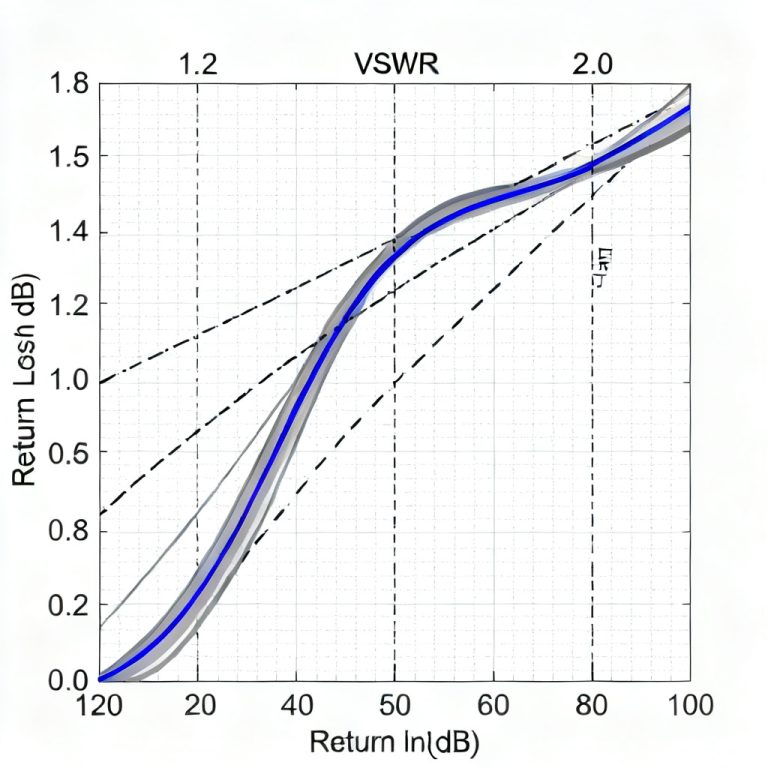
7.2 Insertion Loss & Return Loss (VNA Testing)
| High-Speed Protocol | Test Frequency | Max Insertion Loss | Return Loss Requirement |
|---|---|---|---|
| PCIe 4.0 | 8 GHz | < 0.8 dB/in | < -10 dB (per high speed pcb standards) |
| PCIe 5.0 | 16 GHz | < 1.0 dB/in | < -10 dB (per high speed pcb standards) |
| 25G / 100G Ethernet | 12.89 GHz | < 0.9 dB/in | < -12 dB (per high speed pcb standards) |
| 56G PAM4 | 14 GHz | < 1.0 dB/in | < -10 dB (per high speed pcb standards) |
| 112G PAM4 | 28 GHz | < 1.2 dB/in | < -8 dB (design-dependent) (per high speed pcb standards) |
7.3 Unified IPC-2141 Reference
IPC-2141 provides authoritative industrial guidelines for impedance calculation, stack-up design, TDR/VNA test operations, and finished product acceptance, forming a unified technical standard for designers, manufacturers, and global buyers and supporting high speed pcb standards.
8. High-Speed Material Selection Guide (Dk/Df & Loss Rating)
Base material selection directly determines high-frequency signal loss and data transmission performance. Choosing the right material is the first step to comply with high speed pcb standards.
| Application Scenario | Recommended Material Series | Dk @10GHz | Df @10GHz | IPC-4101 Class |
|---|---|---|---|---|
| PCIe 4.0 / 25G Ethernet | Shengyi S7439, IT-170GRA | 3.66 | 0.008 | C2 (meets high speed pcb standards) |
| PCIe 5.0 / 56G PAM4 | Panasonic Megtron 6 | 3.70 | 0.002 | C2/C3 (meets high speed pcb standards) |
| 100G~200G Ethernet | Isola I-Tera MT40 | 3.45 | 0.0022 | C3 (meets high speed pcb standards) |
| 112G PAM4 / mmWave | Megtron 7, Tachyon-100G | 3.35 | 0.0014 | C3 (top high speed pcb standards) |
| Aerospace & Defense | Rogers 3003/4000 Series | Custom | < 0.0025 | Custom (military high speed pcb standards) |
Low-loss high-frequency materials require refined lamination and etching processes; we provide complete material qualification and performance test reports for every batch to prove compliance with high speed pcb standards.
9. Common Certification Pitfalls & How to Avoid Them
| Common Pitfall | Hidden Risk | Professional Solution |
|---|---|---|
| Only laminate UL certified, no finished board UL 796 | Ineligible for North American end-product certification (violates high speed pcb standards) | Require complete UL 796 finished PCB process certification (meets high speed pcb standards) |
| Generic RoHS reports without targeted CAF data | Failed automotive & industrial customer audits (fails high speed pcb standards) | Customize test conditions and duration according to project requirements (complies with high speed pcb standards) |
| TDR testing only on standard coupons | Actual high-speed traces suffer impedance drift (violates high speed pcb standards) | Add spot testing on critical high-speed signal routes (meets high speed pcb standards) |
| Vague REACH compliance without SVHC declaration | Outdated compliance status with updated EU regulations (fails high speed pcb standards) | Provide real-time SVHC screening reports based on the latest official list (complies with high speed pcb standards) |
10. Industry-Specific Certification & Standard Requirements Cheat Sheet
| Industry | Core Standards & Certifications | Core Compliance Focus |
|---|---|---|
| Consumer Electronics | IPC Class 2, UL 94V-0, RoHS | Cost control, basic safety & environmental protection (basic high speed pcb standards) |
| Data Center & Telecom | IPC Class 2/3, UL, RoHS, VNA loss testing | Low signal loss, stable impedance, 24/7 continuous operation (core high speed pcb standards) |
| Automotive Electronics | IATF 16949, AEC-Q100, IPC Class 3, CAF & thermal cycling | Full traceability, vibration & extreme temperature resistance (strict high speed pcb standards) |
| Medical Devices | ISO 13485, IPC Class 3, full document traceability | Regulatory compliance, long-term stable & safe operation (medical high speed pcb standards) |
| Aerospace & Defense | AS9100, MIL-STD, IPC Class 3, 100% traceability | Extreme environmental adaptability, military-grade reliability (top high speed pcb standards) |
| Industrial Equipment | IPC Class 2, UL 94V-0, RoHS | Balanced cost, durability, and basic compliance (industrial high speed pcb standards) |
11. Our Official High-Speed PCB Certifications & In-House Testing Capacity
11.1 Official Quality System Certifications
✅ ISO 9001:2025 Global Quality Management System
✅ IATF 16949 Automotive Quality Management Certification
✅ ISO 13485 Medical Device Quality System
All certifications fully align with high speed pcb standards.
11.2 Product Compliance Certifications
✅ UL 94V-0 Flame Retardant Certification (official UL file number available)
✅ 100% RoHS compliant PCB mass production
✅ Real-time REACH SVHC compliance screening
✅ Complete conflict minerals reporting system
All certifications meet the requirements of high speed pcb standards.
11.3 In-House Professional Testing Capabilities
✅ TDR high-precision impedance testing (up to 50GHz)
✅ VNA insertion loss & return loss high-frequency testing
✅ Flying probe & fixture full electrical testing
✅ Micro-section analysis for layer alignment & hole wall quality
✅ Multi-cycle thermal cycling and damp heat aging tests
✅ Automotive-grade extended CAF testing (up to 1000 hours)
✅ Third-party cooperation for extreme environmental verification
All testing capabilities are designed to verify compliance with high speed pcb standards.
11.4 Our Advantage Over Ordinary PCB Suppliers
| Capability | Typical PCB Supplier | Our Production Standard |
|---|---|---|
| Max VNA Test Frequency | 10 GHz | 50 GHz (exceeds high speed pcb standards) |
| Standard CAF Test Duration | 500h | 1000h for automotive projects (exceeds high speed pcb standards) |
| High-Speed Material Library | Conventional FR-4 Only | Megtron 6/7, Isola, Shengyi high-speed series, Rogers (supports top high speed pcb standards) |
| Batch Loss Test Report | Not provided | Supplied with every shipment (proves high speed pcb standards compliance) |
We provide complete certification files, material datasheets, and customized test reports to support your global supplier audit and customs clearance, proving full compliance with high speed pcb standards.
12. Key Takeaways
- IPC-A-600 and IPC 6012 (Class 2/3) are the basic manufacturing threshold for all high-speed PCBs above 10Gbps, core of high speed pcb standards.
- UL 94V-0 is the universal flame retardant safety baseline for global commercial and industrial high-speed hardware, mandatory in high speed pcb standards.
- RoHS and REACH environmental compliance are non-negotiable for EU exports and global green supply chain cooperation, part of high speed pcb standards.
- Industry-specific systems including IATF 16949, ISO 13485 and AS9100 achieve refined quality control for vertical industries, supporting high speed pcb standards.
- AEC-Q specifications, long-term thermal cycling, and CAF resistance testing determine the service life of high-end automotive and communication PCBs, reliability part of high speed pcb standards.
- Standardized TDR/VNA signal integrity testing ensures full compatibility with PCIe, Ethernet, and PAM4 high-speed transmission protocols, SI part of high speed pcb standards.
- Scientific high-frequency material selection directly reduces signal loss and improves high-speed transmission stability, material part of high speed pcb standards.
- Following complete high speed pcb standards is the only way to ensure high-speed PCB quality, reliability, and global market access.
13. Frequently Asked Questions (FAQ)
Q1: Do prototype high-speed PCBs need to follow high speed pcb standards and UL 94V-0 certification?
A: Yes. Following high speed pcb standards and using UL 94V-0 qualified materials from prototyping to mass production avoids requalification costs and ensures consistent performance.
Q2: What is the difference between IPC Class 2 and Class 3 under high speed pcb standards for 10Gbps+ signals?
A: Under high speed pcb standards, Class 3 provides tighter impedance tolerance, stricter dielectric uniformity, and more rigorous thermal cycling, strongly recommended for 10Gbps+ high-frequency designs.
Q3: Can you provide customized Dk/Df data matching high speed pcb standards for my target frequency?
A: Absolutely. We provide official material data and in‑house VNA verification fully aligned with high speed pcb standards at your required working frequency.
Q4: What documents are needed for automotive audits under high speed pcb standards?
A: We provide IATF 16949 scope certificates, PPAP Level 3 documents, CAF test reports, thermal cycling data, and full material compliance files all meeting high speed pcb standards.
Q5: What high-speed surface finishes do you support under high speed pcb standards?
A: ENIG, immersion silver, immersion tin, ENEPIG, and OSP. We recommend the most suitable finish based on your frequency and assembly process, all compliant with high speed pcb standards.
14. Custom Compliance Support & Instant Quote
Confused by complex global standards and certification requirements when sourcing high-speed PCBs? Need industry-specific compliance solutions for automotive, medical, telecom, or industrial projects that fully follow high speed pcb standards?
Our professional engineering and quality team offers one-stop free compliance support:
- Custom standard configuration by sales region & application industry based on high speed pcb standards
- Full certification packages, test reports, and compliance declarations proving high speed pcb standards compliance
- Complete batch traceability documents for customer audits required by high speed pcb standards
- High-speed stack-up design, impedance control, and low-loss material selection guidance under high speed pcb standards
- Insertion loss budget analysis and pre-layout technical consultation aligned with high speed pcb standards
Whether you need quick prototypes, small-batch trial orders, or large-scale mass production, we deliver fully compliant high-speed PCBs that meet high speed pcb standards, IPC, UL, RoHS, IATF, and industry reliability standards.
🔹 Request Free Compliance Consultation about high speed pcb standards
🔹 Download Full Certification PDF Package proving high speed pcb standards compliance
🔹 Get Project-Specific High-Speed PCB Quote Within 24 Hours following high speed pcb standards
Share your design files, application environment, and certification requirements, and we will provide a cost-effective, fully compliant high-speed PCB solution for your global business that strictly adheres to high-speed PCB standards.