Executive Summary
For hardware engineers, procurement buyers and quality managers sourcing high-speed PCBs for 5G communications, servers, medical devices and military electronics, understanding ipc standards high speed pcb is essential to avoid signal integrity issues, production rework and supply chain disputes. IPC sets global unified rules covering PCB design, material selection, manufacturing, inspection and performance verification. Four core ipc standards high speed pcb dominate high-speed PCB engineering: IPC-A-600, IPC-6012, IPC-4101 and IPC-2141. This comprehensive ipc standards high speed pcb guide integrates authoritative industry technical resources and real manufacturing experience, explaining standard classification, version differences, parameter requirements, material selection and production compliance rules, helping you quickly select the right IPC class, specify standard versions and audit qualified high-speed PCB suppliers.
1. IPC Standards – The Foundation of High-Speed PCB Quality
IPC (Association Connecting Electronics Industries) is the world’s most authoritative electronic industry standard organization, formulating unified specifications throughout the entire PCB lifecycle. For high-speed designs, following ipc standards high speed pcb is mandatory to ensure signal integrity. As detailed in the high-speed PCB standards master page, IPC standards form the technical backbone of the entire industry.
Unlike conventional low-frequency PCBs, high-speed PCB products face strict challenges such as signal attenuation, crosstalk interference, impedance drift, dielectric loss and thermal stability. Without unified IPC standard constraints, designers, manufacturers and buyers will have inconsistent judgment on quality, resulting in unstable signal transmission, shortened product life and batch failure risks.
Four core ipc standards high speed pcb form the complete standard system:
- IPC-A-600: Defines visual appearance and overall board acceptability
- IPC-6012: Regulates PCB qualification performance and manufacturing reliability
- IPC-4101: Standardizes copper-clad laminate base material classification and parameters
- IPC-2141: Provides professional guidelines for impedance design, testing and acceptance
All high-speed PCB projects for communication, server, industrial control, medical and military applications must follow these four standards as the basic benchmark for design and production.
2. IPC-A-600 – Printed Board Acceptability & Class 1/2/3 Definition
IPC-A-600 is the global universal bare PCB visual acceptance standard, establishing clear inspection criteria for surface defects, hole wall quality, trace integrity, edge processing and internal layer flaws. Understanding ipc standards high speed pcb starts with knowing the three reliability classes.
| Class | Product Definition | Typical Application | High-Speed PCB Suitability |
|---|---|---|---|
| Class 1 | General Electronic Products | Consumer electronics, daily household appliances | ❌ Not recommended |
| Class 2 | Dedicated Service Electronic Products | Communication equipment, enterprise servers, industrial control boards | ✅ Fully applicable |
| Class 3 | High-Reliability Electronic Products | Medical devices, aerospace, military equipment | ✅ Fully applicable |
Class 1 only meets basic functional use, with loose defect tolerance. Tiny structural defects easily cause high-speed signal loss and impedance mutation, so it is never used for high-speed circuits. For PCB Manufacturing, Class 2 and Class 3 are the only relevant standards.
Class 2 balances cost and reliability, matching most commercial high-speed communication and server PCB requirements. Class 3 adopts the strictest acceptance standards, minimizing all potential structural risks, suitable for high-speed PCBs working in extreme temperature, vibration and long-term uninterrupted operation environments. When specifying ipc standards high speed pcb, always choose Class 2 or Class 3.
3. IPC-6012 – Qualification, Performance & High-Speed Version Differences
IPC-6012 is the core performance qualification specification for rigid PCBs, specifying mandatory mechanical, electrical, thermal and environmental reliability indicators. With continuous version iterations, different revisions have obvious differences in high-frequency and high-speed performance requirements.
| Version | Core Features | High-Speed PCB Relevance |
|---|---|---|
| 6012B | Basic rigid PCB qualification framework | No dedicated high-frequency clauses |
| 6012C | Added high-frequency stability and dimensional tolerance rules | Support impedance testing and basic high-speed performance verification |
| 6012D | Latest mainstream version | Comprehensive upgrade of high-speed, high-frequency and via structure requirements |
For professional high-speed PCB manufacturing, IPC-6012C and 6012D are the only recognized versions under ipc standards high speed pcb. The key mandatory technical requirements include:
- Precise controlled impedance verification to maintain stable signal transmission
- Strict dielectric thickness uniformity to prevent impedance deviation from lamination errors
- Standardized plated hole wall quality to reduce signal attenuation at vias
- Thermal cycling resistance and insulation stability for long-term high-load operation
When auditing suppliers, you must confirm they strictly implement 6012C/D standards and provide complete performance test reports, which is the core guarantee for high-speed PCB yield and reliability. For High-Speed PCB Material, material selection must also align with IPC-6012 requirements.
4. IPC-4101 – Base Material Specification for High-Speed PCB
The fundamental performance of high-speed PCB depends on base copper-clad laminate materials, and IPC-4101 is the authoritative standard for PCB substrate classification, parameter testing and grade definition. This ipc standards high speed pcb document unifies the testing methods of core high-frequency parameters Dk (dielectric constant) and Df (dissipation factor).
Lower Dk reduces signal transmission delay; lower Df effectively suppresses high-frequency signal dielectric loss, both determining the signal integrity performance of high-speed boards. IPC-4101 classifies mainstream high-speed substrate grades and corresponding application materials:
| Material Grade | Performance Feature | Representative High-Speed Material |
|---|---|---|
| High Tg FR4 | Good thermal stability, regular loss | Ordinary high-speed FR4 board |
| Medium Loss | Balanced Dk/Df, cost-effective | S7000 equivalent laminate |
| Low Loss | Ultra-low dielectric loss, high-frequency adaptation | Megtron 6 and advanced high-speed materials |
High-speed PCB designers must select substrates according to IPC-4101 grade standards based on signal rate and application scenario. Random replacement of unqualified materials will directly cause serious crosstalk, signal attenuation and impedance drift. For pcb cost factors, proper material selection according to IPC-4101 prevents costly over-specification.
5. IPC-2141 – Controlled Impedance Design & Acceptance Guidelines
Impedance control is the core technical difficulty of high-speed PCB design, and IPC-2141 is the exclusive industry guide for controlled impedance design, process control and finished product acceptance. This ipc standards high speed pcb document is essential for maintaining signal integrity.
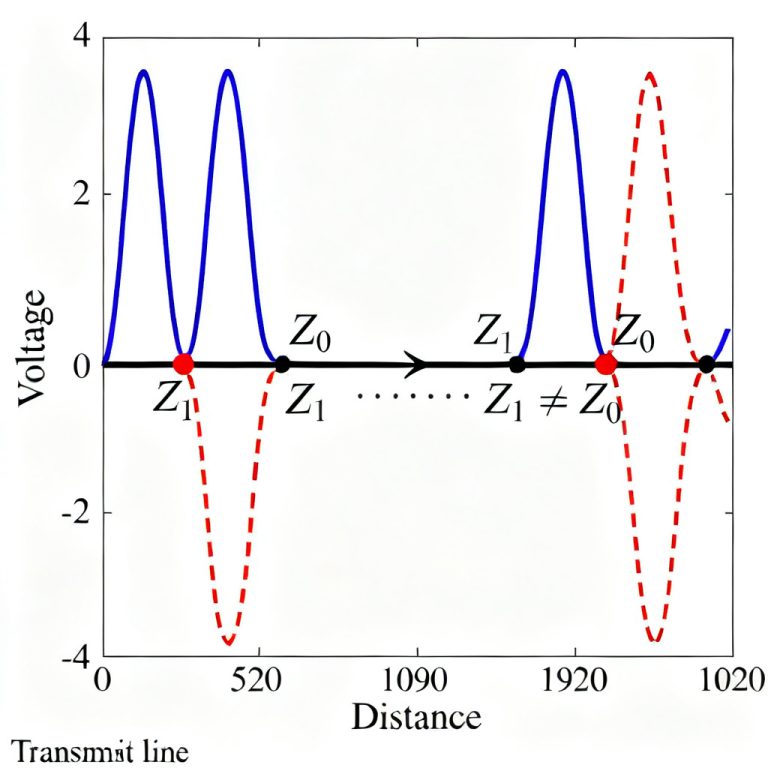
This standard unifies the theoretical calculation models of microstrip lines, striplines, coplanar waveguides and differential pairs, eliminates algorithm differences among design teams, and standardizes stackup design rules of trace width, dielectric thickness and copper foil thickness. For Impedance Matching, following IPC-2141 ensures consistent results.
In production and inspection, IPC-2141 clearly defines impedance testing procedures, sampling standards and tolerance ranges, providing a unified basis for manufacturer process control and buyer incoming inspection. For high-speed digital circuits, radio frequency and microwave PCBs, compliance with IPC-2141 is mandatory. Only by following this standard can impedance consistency of the whole board be locked, avoiding reflection and distortion of high-speed signals.
6. Other Essential IPC Standards for High-Speed PCB Design & Production
In addition to the four core ipc standards high speed pcb, multiple auxiliary IPC specifications run through high-speed PCB design, manufacturing, surface treatment and assembly:
| Standard | Core Application | Relevance to High-Speed PCB |
|---|---|---|
| IPC-2221 | General PCB design specification | Layout spacing, stackup and routing basic rules |
| IPC-4761 | Via protection and hole wall reliability | Via plating and structural design to avoid crosstalk |
| IPC-4552 | ENIG surface treatment specification | Flatness and solderability for high-speed boards |
| IPC-7095 | BGA layout and assembly design | High-density package routing and heat dissipation |
Cooperating core standards with these auxiliary specifications can realize full-link standard compliance of high-speed PCB projects. For high-speed PCB cost, following these standards from the start prevents costly rework.
7. How to Meet IPC Standard Requirements in High-Speed PCB Production
Understanding ipc standards high speed pcb is only the first step; standardized implementation in production is the key to stable quality. Follow this set of executable rules:
- Clarify requirements in the early stage: Confirm IPC-A-600 Class 2/3, specify IPC-6012C/D version, lock IPC-4101 material loss grade and IPC-2141 impedance tolerance, avoid later rework caused by ambiguous terms
- Verify supplier capability: Audit the manufacturer’s experience in high-speed impedance control, low-loss material processing and Class 3 high-reliability board production
- Require complete compliance documents: Before delivery, ask for visual inspection reports, performance qualification data, substrate material certificates and impedance test records
- Sampling inspection according to standards: Conduct random inspection strictly following IPC acceptance criteria to ensure batch consistency
8. Key Takeaways
- IPC standards high speed pcb are anchored by four core documents: IPC-A-600, IPC-6012, IPC-4101 and IPC-2141
- IPC-A-600 divides PCB into Class 1/2/3; Class 2 and Class 3 are the only choices for high-speed PCB
- IPC-6012C and 6012D are the recognized high-speed versions, controlling impedance, dielectric thickness and hole wall quality
- IPC-4101 standardizes Dk/Df parameters and material grading, guiding scientific selection of high-speed low-loss substrates
- IPC-2141 is the core guideline for impedance design, testing and acceptance, solving high-speed signal integrity problems
- Auxiliary standards such as IPC-2221, IPC-4761, IPC-4552 and IPC-7095 supplement full-process design and manufacturing norms
- Clarify standard grades in advance, select qualified suppliers and complete compliance documentation to stably obtain IPC-compliant high-speed PCBs
For a complete understanding of all standards and certifications, return to the high-speed PCB standards master page.
9. FAQ About IPC Standards for High-Speed PCB
Q1: Which is the most important IPC standard for high-speed PCB?
The four core standards IPC-A-600, IPC-6012, IPC-4101 and IPC-2141 are equally important under ipc standards high speed pcb. A-600 controls appearance grade, 6012 controls performance, 4101 controls material, and 2141 controls impedance; none can be omitted.
Q2: Can high-speed PCB use IPC-A-600 Class 1?
No. Class 1 has loose defect tolerance, which easily causes impedance mutation and signal loss, and cannot meet high-speed transmission stability requirements.
Q3: What is the difference between IPC-6012C and 6012D?
6012C initially adds high-frequency and impedance basic requirements; 6012D is the updated latest version, strengthening via structure, lamination tolerance and high-speed environmental reliability rules, which is more suitable for high-end high-speed PCB under ipc standards high speed pcb.
Q4: Why does high-speed PCB need to follow IPC-4101?
It unifies Dk/Df test methods and material grading, avoiding inconsistent material parameters from different suppliers and preventing signal loss caused by mismatched substrates.
Q5: Does IPC-2141 apply to all high-speed designs?
Yes. For any high-speed PCB requiring controlled impedance, following IPC-2141 is mandatory to ensure consistent signal integrity across production batches.
10. Get IPC-Compliant High-Speed PCB Custom Manufacturing & Quotation
Are you looking for reliable IPC-compliant high-speed PCB manufacturing for 5G communication, enterprise servers, medical equipment or military-grade projects? Our production strictly follows all ipc standards high speed pcb: IPC-A-600, IPC-6012, IPC-4101 and IPC-2141 full standard specifications.
We support Class 2 / Class 3 high-reliability customization, low-loss high-speed material selection, precise impedance control and complete IPC compliance test reports. Our professional engineering team can provide stackup design, impedance simulation, material recommendation and one-stop manufacturing service.
Send your Gerber files and requirement details now to get a free technical review and instant factory quotation.