Article Abstract
High-speed PCBs are core precision electronic components widely used in 5G communication, servers, industrial control, aerospace and high-frequency electronic devices. Due to their special material properties, multilayer structure and technical specifications, their import and export customs clearance high speed pcb is far more complex than ordinary PCBs. Unfamiliar with clearance procedures, HS code classification, mandatory documents and international tariff rules will easily lead to cargo detention, customs delays, extra storage fees and penalty costs. This comprehensive customs clearance high speed pcb guide covers the full workflow, required documents, standard HS codes, global import duty rates, DDP vs buyer responsible clearance, common delay reasons and practical avoidance tips.
1. Customs Clearance – A Critical Step for High-Speed PCB Global Shipping
International shipping of high-speed PCBs is not only about freight arrangement and delivery scheduling; customs clearance high speed pcb is the most critical link that determines timeliness, cost and cargo safety. As detailed in the high-speed PCB shipping master page, understanding customs procedures is essential for global procurement.
As high-frequency, low-loss precision circuit boards, high-speed PCBs belong to regulated electronic goods in global customs classification, with stricter declaration standards and inspection requirements than regular single/double-layer PCBs.
Most overseas procurement buyers and small and medium electronics enterprises lack professional experience in cross-border PCB clearance. Common problems include incomplete document preparation, incorrect HS code selection, unreasonable cargo value declaration and misunderstanding of DDP trade terms. These mistakes will directly result in port detention, inspection hold-up, additional demurrage fees and even customs fines.
This customs clearance high speed pcb guide integrates industry official standards, global tariff data, EMS manufacturing enterprise practice and electronic import compliance rules. It sorts out all necessary knowledge for high-speed PCB import and export clearance, helping you standardize declaration, control logistics cost and ensure smooth cargo release every time.
For high-speed PCB cost, customs duties and taxes can significantly impact total landed cost.
2. Standard Customs Clearance Process Flow for High-Speed PCB
High-speed PCB customs clearance follows a unified international standard process, with only minor differences between air freight, sea freight and express delivery. Understanding customs clearance high speed pcb starts with knowing the workflow:
| Step | Stage | Description |
|---|---|---|
| 1 | Shipment Arrival | Cargo arrives at destination airport, seaport or customs warehouse |
| 2 | Customs Declaration Submission | Freight forwarder or customs broker submits all documents |
| 3 | Document Preliminary Review | Customs verifies product name, specs, quantity, declared value |
| 4 | Customs Spot Inspection | High-speed PCBs have relatively high random inspection rate |
| 5 | Duty & Tax Assessment | Customs calculates import duty, VAT or GST |
| 6 | Tax Payment & Clearance Approval | Seller or buyer pays tariffs; customs issues release notice |
| 7 | Final Delivery | Cargo released and arranged for door-to-door delivery |
Following this standardized process and preparing documents in advance can greatly shorten clearance time and reduce the probability of unexpected delays.
3. Mandatory Documents for High-Speed PCB Customs Clearance
Complete, accurate and consistent documents are the foundation of smooth customs clearance high speed pcb. Missing or wrong paperwork is the top cause of PCB shipment delays. For ddp shipping high speed pcb, these documents are handled by the seller.
| Document | Purpose | Mandatory? |
|---|---|---|
| Commercial Invoice | Core declaration for duty assessment and value verification | ✅ Mandatory |
| Packing List | Detailed packaging record for inspection | ✅ Mandatory |
| Bill of Lading / Air Waybill | Transport contract and cargo ownership | ✅ Mandatory |
| Certificate of Conformity (COC) | Certifies compliance with quality and safety standards | ✅ Mandatory for most markets |
| Import & Export License | Required for telecom, aerospace, military applications | ⚠️ Restricted countries only |
| Certificate of Origin | Enjoys preferential tariff rates under trade agreements | 🟡 On-demand |
| IPC-6012 Class 3 Certificate | High-speed PCB special certification | ✅ Recommended |
| Low-loss Material Compliance Report | Verification of Dk/Df parameters | ✅ Recommended |
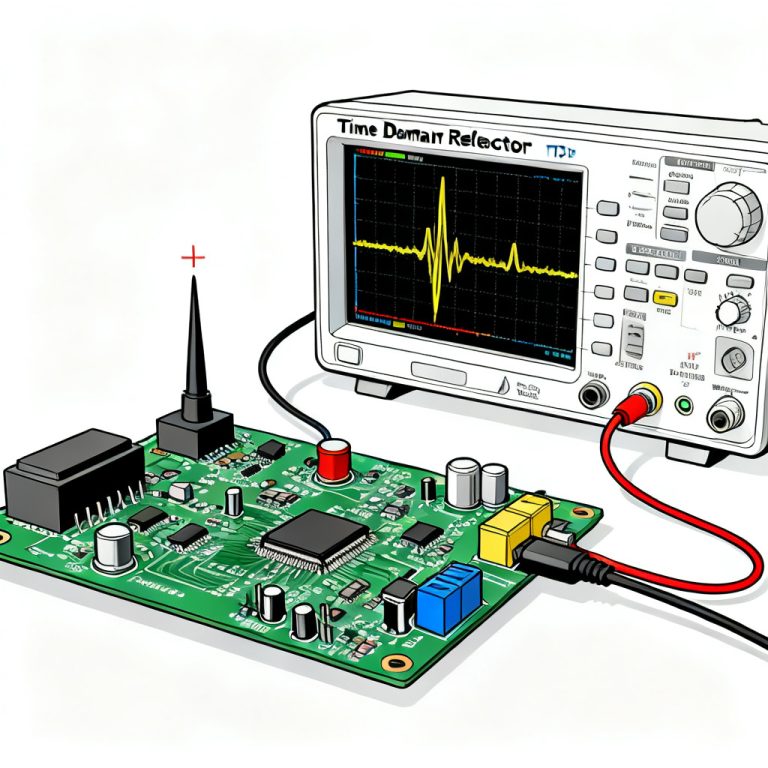
| Impedance Test Report | TDR verification for high-speed signals | ✅ Recommended |
High-speed PCBs need supplementary documents beyond ordinary PCBs to pass technical customs inspection smoothly.
4. Official HS Code Classification for High-Speed PCB
Correct HS code classification is the core premise of smooth customs clearance high speed pcb. It directly determines duty rate, inspection standard, regulatory restriction and tax calculation. Wrong classification will lead to re-inspection, tariff miscalculation and long-term cargo detention.
| HS Code | Description | Applicability |
|---|---|---|
| 8534.00 | Printed circuits (general category) | All standard and high-speed PCBs |
| 8534.00.10 | Multilayer printed circuit boards | ✅ Most matched for high-speed multilayer PCB used in 5G, server, high-frequency equipment |
| 8534.00.90 | Other printed circuit boards | Ordinary single/double-layer PCB and non-special high-speed board |
When declaring, you must select the sub-code according to layer count, material and application scenario. Never confuse high-speed multilayer PCB with regular PCB classification to avoid customs clearance high speed pcb risks.
5. Global Import Duties, VAT & GST for High-Speed PCB
Import duty and tax policies differ greatly across major global markets. Below are the latest standard rates for customs clearance high speed pcb, for buyers to calculate landed cost and make procurement budget in advance. For air sea freight high speed pcb, these taxes apply regardless of shipping method.
| Country/Region | Import Duty | VAT / GST | Notes |
|---|---|---|---|
| United States | 0%–1.6% | Local state sales tax | No federal VAT |
| European Union | 0%–2.7% | 15–25% country-specific VAT | VAT varies by member state |
| United Kingdom | 0%–2.7% | 20% VAT | Fixed rate |
| Japan | 0% | 10% consumption tax | |
| Australia | 0%–5% | 10% GST | Calculated on value + freight + duty |
| South Korea | 0%–5% | 10% VAT | |
| Canada | 0%–5% | 5–13% regional sales tax |
Understanding these tariff standards helps you choose DDP or DAP shipping terms reasonably and avoid sudden hidden costs during customs clearance high speed pcb.
6. DDP vs Buyer Responsible Customs Clearance: Differences & Applicable Scenarios
There are two mainstream clearance responsibility modes for customs clearance high speed pcb cross-border shipping: DDP and buyer self-handled clearance. Each has its own advantages and suitable usage scenarios.
| Comparison Item | DDP (Delivered Duty Paid) | Buyer Responsible Clearance |
|---|---|---|
| Responsibility | Seller handles all documents, declaration, duty/tax payment | Buyer arranges customs broker, handles declaration, pays taxes |
| Buyer Workload | No customs work, just receive goods | Need professional logistics and customs coordination |
| Suitable for | First-time clients, small-batch samples, buyers without customs team | Long-term stable orders, large-batch bulk shipment |
| Feature | Hassle-free, total price includes all fees | Buyer controls declared value and HS code to optimize tax cost |
For most overseas buyers, DDP is the recommended choice for customs clearance high speed pcb to avoid complex procedures and unexpected delays.
7. Common Causes of High-Speed PCB Customs Delays & How to Avoid
Even with basic preparation, customs clearance high speed pcb can still be delayed due to human error and routine customs regulation. The main reasons are summarized below:
| Cause | Impact | Avoidance |
|---|---|---|
| Incomplete or inconsistent documents | Immediate suspension | Check all documents before shipment; keep data unified |
| Incorrect declared cargo value | Fines, inspection, tax miscalculation | Declare value honestly according to actual transaction price |
| Wrong HS code classification | Duty recalculation, reclassification | Use 8534.00.10 for multilayer high-speed boards |
| Customs random inspection | Extended clearance time | Complete technical certificates in advance |
| Lack of special technical certificates | Technical inspection rejection | Prepare IPC certification and impedance test reports |
Understanding these delay causes is essential for smooth customs clearance high speed pcb.
8. Key Takeaways
- Customs clearance high speed pcb is the most critical step for cross-border shipping, directly affecting delivery time and overall cost
- Master the standard clearance process: arrival → declaration → review → inspection → tax assessment → payment → delivery
- Prepare commercial invoice, packing list and waybill as three core basic documents; add IPC-6012 Class 3 and impedance test reports for high-speed PCBs
- Adopt correct HS code: 8534.00.10 for multilayer high-speed PCB to avoid classification errors
- Refer to global duty and tax rates to calculate landed cost and optimize procurement budget
- Choose DDP for small batches and new clients; choose buyer self-clearance for long-term large orders to control cost
- Standardize document filling, declare value honestly and complete special technical certificates to effectively avoid customs delays and detention
For a complete understanding of all shipping and export services, return to the high-speed PCB shipping master page.
9. FAQ About High-Speed PCB Customs Clearance
Q1: What is the correct HS code for high-speed PCB?
General printed circuit board HS code is 8534.00; multilayer high-speed PCB uses 8534.00.10, which is the most accurate classification for customs clearance high speed pcb.
Q2: What documents are specially required for high-speed PCB different from ordinary PCB?
Besides basic papers, you need IPC-6012 Class 3 certificate, low-loss material compliance document and impedance test report for smooth customs clearance high speed pcb.
Q3: Is DDP recommended for high-speed PCB shipment?
Yes. For small batches, samples and buyers without customs clearance experience, DDP saves all declaration and tax handling work, with door-to-door delivery available.
Q4: Why do high-speed PCBs have a higher customs delay rate?
They are high-value precision electronic goods with higher random inspection rate; meanwhile incomplete technical certificates and wrong HS codes are common error points in customs clearance high speed pcb.
Q5: Do I need to pay VAT and GST when importing high-speed PCB?
Most countries levy standard VAT or GST based on cargo value; Japan charges 10% consumption tax, Australia charges 10% GST, EU and UK apply respective national VAT rates.
10. Get Professional Customs Clearance & DDP Shipping Support
If you are sourcing high-speed PCB from China and need one-stop import export customs clearance high speed pcb service, we can provide full support including document sorting, HS code confirmation, duty calculation, customs declaration and DDP door-to-door delivery.
We are familiar with the customs rules of the US, EU, UK, Japan, Australia and other major markets, able to help you avoid clearance delays, reduce tariff cost and simplify cross-border procurement procedures. Whether you need sample small batches or mass production orders, we can customize exclusive DDP clearance and shipping solutions for your project.
Submit your inquiry now, tell us your required high-speed PCB specs, order quantity and destination country, and we will send you a detailed quotation and full customs clearance high speed pcb arrangement plan within the shortest time.