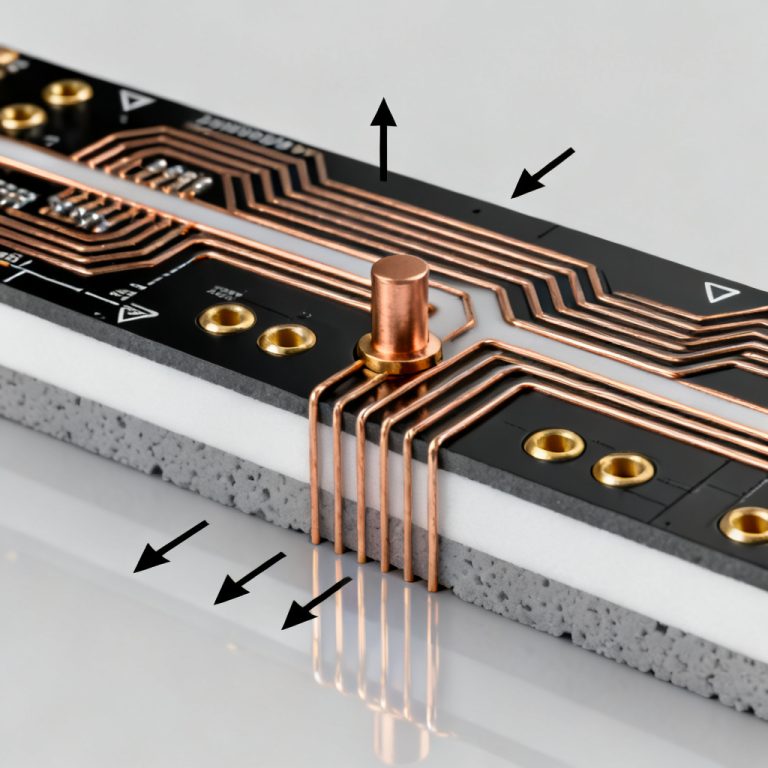
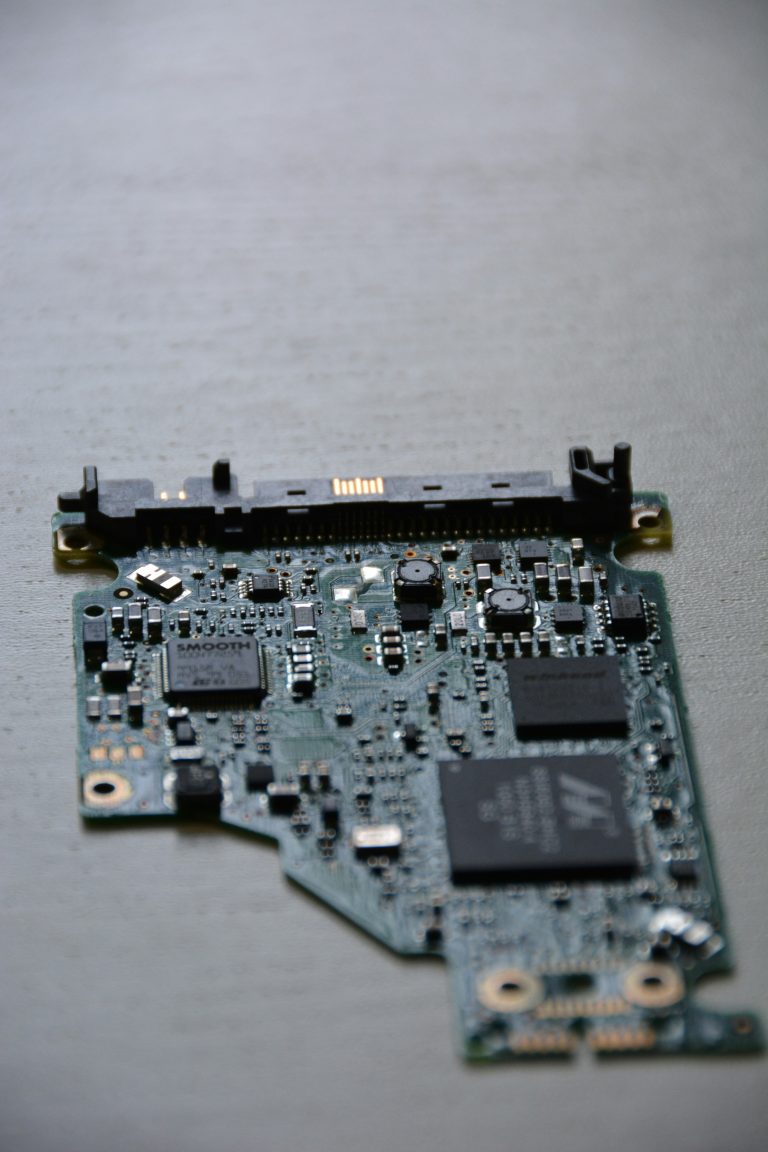
DDR PCB design guide for DDR4 and DDR5: signal grouping, fly-by topology, length matching (±5-10mil DQ/DQS), VTT termination, impedance (40-60Ω/100Ω), crosstalk control, and complete layout checklist for industrial & embedded hardware.
Overview of DDR PCB Design
DDR (Double Data Rate) memory interface has become the mainstream high-speed memory solution for embedded systems, industrial control equipment, server motherboards, automotive electronics and AI edge computing devices. As detailed in the High-Speed Interfaces master page, DDR is one of several critical protocols that demand specific layout rules alongside PCIe, USB, and Ethernet. With the continuous upgrade from DDR4 to DDR5, data transfer speed keeps rising, while PCB layout difficulty, timing margin requirements and signal integrity constraints become far more stringent than low-speed parallel circuits.
Unlike ordinary digital interfaces, DDR PCB design faces three core challenges: a large number of parallel signal lines, ultra-strict timing synchronization budgets, and multiple optional routing topologies together with precise impedance matching rules. A minor layout error such as unreasonable trace routing, excessive length skew, discontinuous reference plane or improper VTT termination will directly cause signal reflection, eye diagram shrinkage, crosstalk interference, system boot failure, intermittent data error and unstable operation in mass production.
A standardized DDR PCB design workflow must cover signal grouping, topology selection, Impedance Matching, length matching, termination layout and power integrity optimization. Proper Return Path design is also critical for DDR, as incomplete reference planes cause signal reflection and EMI. This guide integrates official chip manufacturer specifications, high-speed SI design standards and PCB Manufacturing best practices, helping designers build compliant, stable and mass-producible DDR4 and DDR5 layout solutions easily.
DDR4 vs DDR5 Key Technical Differences
DDR5 is not only a simple speed upgrade from DDR4, but an overall optimization in working voltage, transmission rate, channel architecture, power management and layout tolerance, which directly changes PCB routing constraints and termination schemes.
| Parameter | DDR4 | DDR5 |
|---|---|---|
| Data Rate | 1600–3200 MT/s | 3200–6400 MT/s |
| Operating Voltage | 1.2V | 1.1V |
| Main Topology | Fly-by | Fly-by |
| Channel per DIMM | Single channel | Dual independent channels |
| Termination & Power | Independent VTT termination | VTT + Onboard PMIC |
| Impedance Tolerance | ±10% | Tighter ±5% |
DDR5 doubles the maximum bandwidth compared with DDR4, perfectly matching high-performance computing and high-bandwidth embedded scenarios. The reduced 1.1V working voltage lowers overall power consumption, but makes signals more sensitive to voltage ripple and crosstalk noise. Understanding Insertion Loss is also critical for DDR5, as higher data rates make channel loss a limiting factor.
While both DDR4 and DDR5 adopt fly-by topology as the mainstream routing structure, DDR5 supports two independent channels on one DIMM, demanding stricter signal isolation and inter-channel crosstalk suppression. For material selection that meets these tighter tolerances, refer to High-Speed PCB Material. In terms of layout tolerance, DDR PCB design for DDR5 has tighter impedance and length skew limits, requiring more precise trace width control and differential pair routing than DDR4.
DDR Signal Grouping & Impedance Requirements
Reasonable signal grouping is the foundation of orderly DDR routing and signal integrity control. All DDR4 and DDR5 signals are divided into three core groups, each with fixed impedance standards and independent length matching reference benchmarks.
| Signal Group | Included Signals | Controlled Impedance | Length Matching Reference |
|---|---|---|---|
| Data Byte Lane | DQ0~7, DQS0, DM0 | 40–60Ω Single-ended | Intra-group matched to DQS |
| Address & Command | ADD, CTRL, CS, ODT | 40–60Ω Single-ended | Matched to CK differential clock |
| Differential Clock | CK_t, CK_c | 100Ω Differential | Internal pair length matching |
The data group is the most timing-sensitive part of the entire DDR interface. Each byte lane contains 8 DQ data lines, one DQS differential strobe and one DM data mask signal. All signals in the same byte lane must be routed in bundles, kept away from other byte lanes and address lines to reduce crosstalk. Single-ended impedance is strictly controlled at 40–60Ω for both DDR4 and DDR5. The foundational rules for Differential Pair Routing apply directly to DQS and CK pairs.
CK differential clock pair uses standard 100Ω differential impedance. It must maintain consistent trace spacing along the whole route, avoid crossing split reference planes and reduce via usage, as it determines the timing reference of the entire address and command system.
DDR PCB Topology: T-Topology vs Fly-by Topology
Two classic routing topologies are widely used in DDR design: T-Topology and Fly-by Topology. Different DDR generations have clear applicable topology standards, and wrong selection will cause serious signal reflection and timing mismatch.
| Topology | Applicable Generation | Advantages | Disadvantages |
|---|---|---|---|
| T-Topology | DDR2 / DDR3 | Easy overall length matching | Poor signal integrity at high speed |
| Fly-by | DDR4 / DDR5 | Minimal reflection, excellent signal quality | Requires VTT termination |
T-Topology adopts a central node branching structure, popular in DDR2 and DDR3 era. However, above 1600MT/s, multi-branch structure causes severe impedance discontinuity and is no longer suitable for DDR4 and DDR5 high-speed scenarios. Fly-by topology uses daisy-chain routing, greatly suppresses reflection, and becomes the only mainstream solution for DDR4 and DDR5.
DDR Length Matching Rules & Skew Tolerance
Length matching is the core rule of DDR PCB design, directly determining setup/hold timing margin. Each signal group has clear tolerance limits.
| Signal Group | Length Matching Tolerance | Matching Standard |
|---|---|---|
| DQ/DM Intra Byte Lane | ±5–10mil | Align all DQ/DM to DQS |
| DQS Differential Pair | ±2mil | Internal P/N pair skew control |
| Address & Command Group | ±50–100mil | Match overall delay to CK clock |
| CK Differential Clock | ±2–5mil | Internal clock pair length balance |
DQ byte lane has the strictest requirement. Since DQS is the sampling clock of data signals, excessive skew leads to sampling offset and bit error. DQS and CK differential pairs must control internal length within 2–5mil. Asymmetric differential length weakens common-mode noise suppression and worsens EMI.
VTT Termination Principle and Layout Guidelines
VTT termination is indispensable for DDR4/DDR5 fly-by topology, used to absorb signal reflection and stabilize signal swing. VTT termination resistors must be placed at the tail end of the fly-by daisy chain, close to the last memory particle. Resistance value: 40–60Ω, matching single-ended impedance. VTT supply voltage is fixed at VDD/2.
In layout, VTT power traces should be short and direct, with sufficient decoupling capacitors. For DDR5 with PMIC, isolate mainboard VTT from module internal power. Missing VTT termination directly causes signal oscillation and failure.
PCB Stackup, Crosstalk and Via Design Best Practices
For DDR4: 6-layer stackup recommended. For DDR5: 8-layer or more, with signal-ground-signal-power structure. Crosstalk control: DDR4: 3W spacing; DDR5: 5W spacing. Separate byte lanes with ground traces or stitching vias. Via design: Minimize vias for DQS and CK pairs; use micro-vias if possible. Avoid placing DDR vias on split plane gaps.
Complete DDR4 & DDR5 Layout Checklist
✅Item ✅DQ/DM within each byte lane meet ±5–10mil matching to DQS ✅DQS and CK differential pairs within ±2–5mil skew ✅Address/command signals use fly-by routing without branches ✅VTT resistors at fly-by bus tail with correct resistance and VDD/2 voltage ✅DDR traces above complete ground/power reference planes ✅3W/5W spacing for crosstalk control ✅Decoupling capacitors near controller and memory chips ✅Minimize vias for differential pairs; avoid plane splits
Key Takeaways for DDR PCB design
- DDR4 and DDR5 use fly-by topology exclusively
- Signal grouping and impedance: 40–60Ω single-ended, 100Ω differential
- DQ to DQS skew control is the highest priority (±5–10mil)
- VTT termination cannot be omitted in fly-by design
- DDR5 requires tighter tolerances, better stackup, and stricter crosstalk control
- Follow the checklist to avoid debugging and ensure mass production
FAQ About DDR PCB design
Q1: What is the main difference between DDR4 and DDR5 PCB layout?
DDR5 has higher transmission rate, lower 1.1V voltage, dual-channel per DIMM, tighter impedance and length skew tolerance, and needs matching PMIC and stricter crosstalk control.
Q2: Why is fly-by topology mandatory for DDR4 and DDR5?
Fly-by daisy-chain routing minimizes branch stubs and signal reflection, providing better signal eye diagram and timing margin, which T-topology cannot achieve at high MT/s rate.
Q3: What happens if VTT termination is omitted?
Severe signal reflection, overshoot/undershoot, timing margin shrinkage, system instability, random crash and data error.
Q4: How much length skew is allowed for DQ and DQS?
Standard control within ±5–10mil to ensure accurate data sampling timing.
Q5: How many PCB layers are recommended for DDR5 design?
At least 8 layers, to ensure complete reference plane, stable impedance and effective power integrity.
Professional DDR PCB Design & Layout Support
DDR4 and DDR5 high-speed PCB design involves complex impedance calculation, stackup design, SI simulation, length matching, fly-by topology, and VTT termination. Many teams face repeated debugging due to insufficient DDR rule experience.
If you need DDR layout constraint customization, stackup & impedance calculation, SI simulation, design rule review, or turnkey high-speed PCB design service, our engineering team provides tailored solutions. Send your project requirements for free technical consultation and accurate quotation.
© 2026 HighSpeedPCBs