[rank_math_breadcrumb]
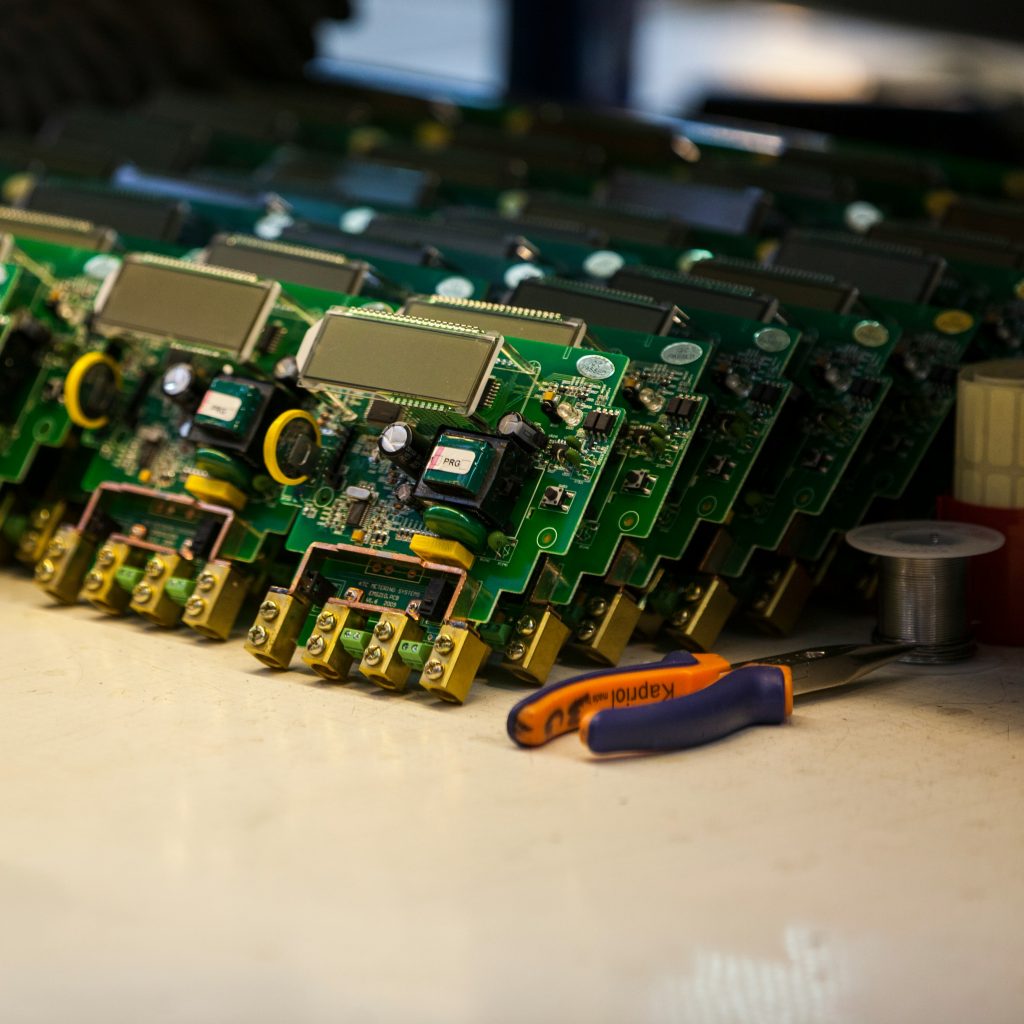
FR4 is the dominant glass-reinforced epoxy laminate for nearly all conventional PCB fabrication, valued for low cost, mature process compatibility, and reliable mechanical performance. When used as a fr4 high speed pcb material, standard FR4 shows obvious performance degradation at microwave frequencies and multi-Gbps data rates due to unstable dielectric constant (Dk), rising loss tangent (Df), and frequency-dependent insertion loss. Understanding the boundaries of fr4 high speed pcb material is essential for cost-effective design.
Material selection involves trade-offs between cost and performance. The PCB Materials Selection Guide covers all options from standard FR4 to premium high-speed laminates. This guide explains how to evaluate fr4 high speed pcb material for your project, covering core electrical/thermal/physical parameters, loss behavior across 1GHz to 10GHz, upgraded grades, direct comparison with premium high-speed materials, clear application boundaries, step-by-step selection rules, design best practices, and frequently asked questions.
Table of Contents
- 1. Introduction: What Is FR4 & Can It Be Used for High-Speed PCB?
- 2. Core Key Parameters of FR4 for High-Speed Design (Dk/Df/Tg/Water Absorption)
- 3. FR4 Signal Loss vs Frequency: Performance Boundaries from 1GHz to 10GHz
- 4. Improved FR4 Grades: High-Tg FR4 vs Modified Low-Loss FR4
- 5. FR4 vs Professional High-Speed PCB Materials: Full Comparison
- 6. Exact Scenarios When You Can Safely Use FR4 for High-Speed Signals
- 7. FR4 Grade Selection Guide by Application & Data Rate
- 8. High-Speed PCB Design Best Practices When Using FR4
- 9. Key Takeaways & Core Decision Rules
- 10. FAQ About FR4 for High-Speed PCB Design
- 11. Get Free PCB Material Evaluation & Custom Design Consultation
Introduction: What Is FR4 & Can It Be Used for High-Speed PCB?
As a fr4 high speed pcb material, FR4 is a flame-retardant fiberglass woven cloth reinforced epoxy laminate, the universal base substrate for consumer electronics, industrial control, automotive, and communication printed circuit boards worldwide. Its mainstream dominance comes from three irreplaceable advantages: extremely low raw material and manufacturing cost, fully mature global PCB fabrication processes, and excellent machinability, mechanical rigidity, and layering stability for standard multilayer boards. For many engineers, FR4 is the default fr4 high speed pcb material for initial prototyping.
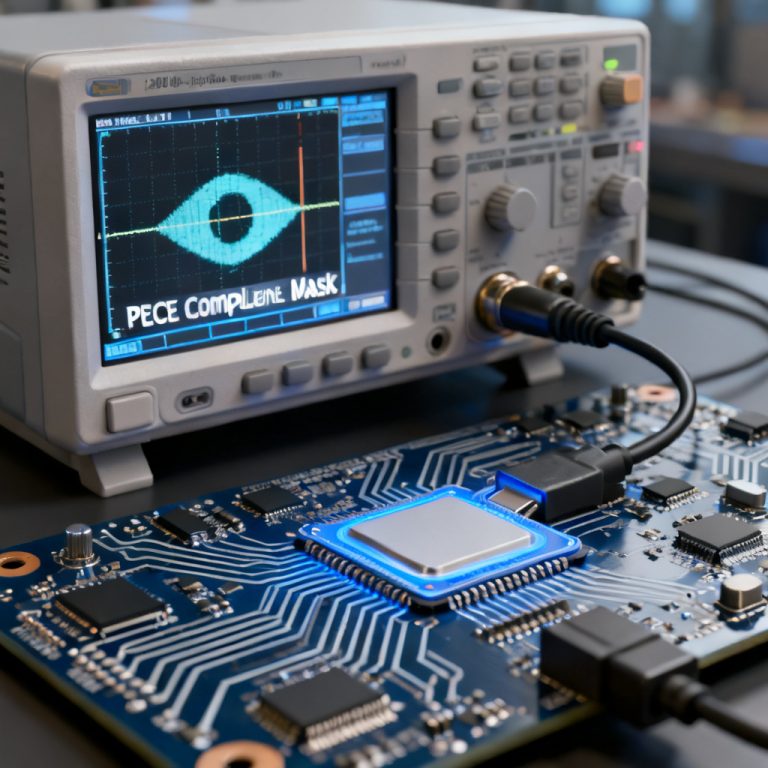
For decades, designers and manufacturers have relied on standard FR4 for low-frequency digital circuits, power distribution boards, general IoT hardware, and ordinary multilayer PCBs. The material works perfectly at low frequencies and low-to-medium data rates, with stable impedance control and consistent mass production yield. Signal integrity starts with the right substrate. The Signal Integrity Guide explains how material parameters affect eye diagrams and jitter — and FR4 performs adequately within its boundaries as a fr4 high speed pcb material.
Nevertheless, high-speed PCB design operating at 1GHz+ frequency and 3Gbps+ data rate exposes inherent weaknesses of standard FR4. Its dielectric constant Dk fluctuates significantly as frequency increases; loss tangent Df rises sharply at 1–10GHz, bringing severe dielectric loss, insertion loss, phase shift, crosstalk, and glass weave skew issues. These signal integrity problems directly cause eye diagram shrinkage, transmission delay mismatch, and even communication link failure in high-speed SerDes, Ethernet, RF, and differential interface circuits.
It is critical to understand that FR4 is not entirely unsuitable for high-speed design—it has clear usable boundaries. This guide systematically defines those boundaries for fr4 high speed pcb material, explains underlying physical principles, provides parameter benchmarks, classification, comparison tables, selection standards, and practical design rules to help you make cost-performance balanced material decisions without over-engineering or under-specification.
Core Key Parameters of FR4 for High-Speed Design (Dk/Df/Tg/Water Absorption)
To simulate impedance, calculate signal loss, and complete stackup design accurately for fr4 high speed pcb material, you must master four core FR4 parameters that directly determine high-speed performance and long-term reliability. Impedance control depends on Dk accuracy. The Impedance Matching Ultimate Guide provides calculation methods and tolerance guidelines for FR4-based designs.
| Parameter | Typical Benchmark Value | Professional Explanation for High-Speed Design |
|---|---|---|
| Dk (Dielectric Constant) @1MHz | 4.2–4.8 | Dk gradually decreases as frequency climbs; unstable Dk causes controlled impedance deviation, directly breaking differential pair and high-speed bus matching for any fr4 high speed pcb material |
| Df (Loss Tangent) @1MHz | 0.015–0.020 | Low loss at low frequency; rises above 0.02 at 10GHz, becoming the main source of high-frequency dielectric attenuation in fr4 high speed pcb applications |
| Tg Glass Transition Temperature | 130°C–170°C | Divided into standard Tg, mid Tg, and high Tg; higher Tg improves thermal resistance, reduces board warpage, layer delamination, and deformation during multiple reflow cycles |
| Water Absorption | 0.1%–0.3% | Moisture absorption in humid environments distorts Dk and Df stability, leading to signal drift and reducing outdoor/industrial PCB service life |
Unlike dedicated high-speed laminates with tightly fixed Dk/Df across broadband frequency, FR4 has natural parameter dispersion. In high-speed design simulation for fr4 high speed pcb material, you must reserve tolerance margin for Dk fluctuation; otherwise, actual board impedance will deviate far from simulation results.
FR4 Signal Loss vs Frequency: Performance Boundaries from 1GHz to 10GHz
The biggest limitation of fr4 high speed pcb material in high-speed application is its frequency-dependent loss characteristic. As operating frequency increases, both dielectric loss and conductor loss escalate, forming clear usability thresholds that every designer must follow when selecting fr4 high speed pcb material.
| Frequency Range | Loss Level | Usability & Design Suggestion |
|---|---|---|
| ≤ 1GHz | Acceptable Low Loss | ✅ Fully recommended; stable Dk/Df, minimal insertion loss, no obvious signal integrity risks for general high-speed interfaces using fr4 high speed pcb material |
| 1GHz – 3GHz | Moderate Loss | 🟡 Use with caution; loss begins to rise rapidly. Must strictly limit trace length, optimize stackup, and control impedance tolerance for fr4 high speed pcb designs |
| 3GHz – 5GHz | Relatively High Loss | 🟡 Only applicable for ultra-short traces under 2–3 inches; long differential pairs or high-speed buses will face obvious signal distortion and attenuation in fr4 high speed pcb material |
| > 5GHz / Up to 10GHz | Severe High Loss | ❌ Not recommended at all; excessive Df causes massive signal attenuation, phase distortion, and unreliable high-speed transmission for any fr4 high speed pcb application |
Visually, FR4 loss tangent presents a continuous upward curve from 1GHz to 10GHz. No layout optimization, routing adjustment, or stackup improvement can eliminate the material’s inherent high-frequency loss. For 5G RF modules, 10G/40G Ethernet, high-speed SerDes above 5Gbps, and millimeter-wave circuits, standard fr4 high speed pcb material cannot meet basic signal integrity requirements.
Improved FR4 Grades: High-Tg FR4 vs Modified Low-Loss FR4
To fill the gap between standard FR4 and expensive professional high-speed materials, laminate manufacturers have developed upgraded FR4 variants. These improved grades retain FR4’s process compatibility and cost advantages while solving partial thermal or loss pain points. When evaluating fr4 high speed pcb material options, it is essential to distinguish their functions clearly, as many designers confuse high-Tg FR4 with low-loss FR4.
High-Tg FR4 as a fr4 high speed pcb material
- Core Features: Elevated glass transition temperature, enhanced thermo-mechanical stability, better resistance to warpage and delamination during multi-reflow and high-temperature working environments.
- Critical Limitation: No improvement in Dk and Df loss performance. It only solves thermal reliability, not high-frequency signal loss for fr4 high speed pcb applications.
- Best Application: Multilayer PCBs, industrial high-temperature scenarios, general high-speed design below 3Gbps.
Modified Low-Loss FR4 as a fr4 high speed pcb material
- Core Features: Optimized epoxy resin formula, suppressed Df value, lower high-frequency loss than standard FR4, and more stable Dk across medium frequency bands.
- Critical Limitation: Still far inferior to Rogers, Megtron and other dedicated high-speed laminates; only a transitional fr4 high speed pcb solution.
- Best Application: Cost-limited projects up to 5Gbps, ultra-short trace high-speed routing, and cost-sensitive medium-performance communication boards.
In short: High-Tg fixes heat issues; low-loss FR4 partially fixes high-frequency loss. Neither can replace true high-speed substrates for rates above 5Gbps or frequency above 5GHz. Always match your fr4 high speed pcb material to your actual performance requirements.
FR4 vs Professional High-Speed PCB Materials: Full Comparison
When making material selection decisions, you need a clear cost-performance benchmark between FR4 (standard & improved) and industry high-performance laminates. High-speed laminate brands like Rogers, Megtron, and Shengyi offer progressively better loss performance at higher cost, often replacing fr4 high speed pcb material in demanding applications.
| Comparison Item | Standard / Improved FR4 | Professional High-Speed Materials |
|---|---|---|
| Relative Cost | Cost baseline, low cost for fr4 high speed pcb mass production | 2–5 times higher cost; higher raw material and specialized fabrication cost |
| Signal Loss Performance | High dielectric loss at GHz band; Df rises sharply with frequency for fr4 high speed pcb material | Loss nearly 10× lower than FR4; ultra-stable Dk/Df across broadband 1–10GHz |
| Maximum Data Rate Support | 3–5Gbps (only short traces for low-loss FR4) as fr4 high speed pcb limit | 10Gbps up to 112Gbps; supports 5G/6G RF, high-end SerDes, 40G/100G Ethernet |
| Dk Stability | Poor; obvious drift with frequency, temperature and humidity in fr4 high speed pcb material | Excellent; tightly controlled Dk tolerance, minimal fluctuation |
| Process Compatibility | 100% compatible with standard PCB factories, no special process required for fr4 high speed pcb | Partial materials need specialized lamination, drilling and etching; only premium factories support |
| Environmental Stability | Moderate water absorption, easily affected by humid & thermal conditions | Ultra-low water absorption, stable performance in harsh industrial & outdoor environments |
The core trade-off is straightforward: choose fr4 high speed pcb material when budget is tight, speed is low, and traces are short. Choose dedicated high-speed material when frequency >5GHz, rate >5Gbps, traces are long, or product requires long-term high reliability. Understanding this trade-off is key to selecting the right fr4 high speed pcb material.
Exact Scenarios When You Can Safely Use FR4 for High-Speed Signals
You can adopt standard or improved fr4 high speed pcb material for your design if your project meets all the following conditions:
- Trace length is extremely short: Controlled within 2–3 inches, minimizing cumulative insertion loss and phase skew in fr4 high speed pcb designs.
- Data rate ≤ 3Gbps: Suitable for USB2.0, DDR3, low-speed HDMI and common industrial high-speed interfaces where fr4 high speed pcb material works reliably.
- Cost-sensitive mass production: Consumer electronics, entry-level IoT, low-end industrial control boards that prioritize budget control.
- Rapid prototype verification: R&D sample boards requiring fast turnaround and low trial cost; formal mass production can upgrade materials later if needed.
These are the ideal conditions for fr4 high speed pcb material usage.
Scenarios You Must NOT Use Standard FR4
- Data rate over 5Gbps or operating frequency over 5GHz — beyond what fr4 high speed pcb material can handle
- Long differential pairs and high-speed bus routing
- 5G RF, millimeter-wave, and high-precision communication circuits
- Automotive, medical, and industrial equipment requiring long-term high reliability
- Strict impedance control and high signal integrity specification projects
FR4 Grade Selection Guide by Application & Data Rate
Select the right FR4 grade according to application scenario to avoid over-cost or insufficient performance when choosing fr4 high speed pcb material. Routing rules must adapt to material properties. The High-Speed PCB Routing Rules guide covers trace spacing and length matching for fr4 high speed pcb designs.
| Application Scenario | Recommended FR4 Grade | Reason for fr4 high speed pcb selection |
|---|---|---|
| Consumer electronics, ordinary industrial control, low-speed power PCB | Standard Tg FR4 | Lowest cost, mature process, fully meets low-frequency conventional circuit demands |
| General high-speed below 3Gbps, multilayer PCB with multiple reflow | High-Tg FR4 | Resists thermal stress, reduces warpage and layer separation; stable enough for sub-3Gbps signals |
| Limited high-speed up to 5Gbps, cost-sensitive medium-speed interfaces, short-trace RF | Modified Low-Loss FR4 | Reduced Df, better high-frequency loss control, ideal cost-performance transition fr4 high speed pcb option |
High-Speed PCB Design Best Practices When Using FR4
If you have to use FR4 for medium high-speed design, follow these industry-proven rules to minimize signal integrity risks when working with fr4 high speed pcb material:
- Keep high-speed traces as short as possible, avoid unnecessary stubs and long routing
- Apply 3W rule to reduce crosstalk between high-speed lines
- Strictly control differential pair length matching and impedance tolerance for fr4 high speed pcb designs
- Use complete ground planes to isolate high-speed signals and suppress noise
- Avoid excessive via transitions, which aggravate loss and reflection on FR4
- Choose high-Tg or low-loss upgraded FR4 in advance for multilayer and thermal-intensive boards
Stack-up design affects impedance and crosstalk. The Stackup Design Guide covers layer arrangements for fr4 high speed pcb boards.
Key Takeaways & Core Decision Rules
- Standard fr4 high speed pcb material works perfectly for ≤3Gbps and ≤1GHz high-speed designs, especially for short traces and cost-sensitive mass production
- Once your design exceeds 5Gbps data rate or 5GHz frequency, even modified low-loss FR4 cannot meet requirements—upgrade to professional high-speed laminate
- High-Tg FR4 only improves thermal stability, not high-frequency loss; do not treat it as a high-speed material solution when selecting fr4 high speed pcb grade
- Modified low-loss FR4 is a cost-effective transitional fr4 high speed pcb option, not a replacement for true high-speed substrates
- Fr4 high speed pcb material selection must balance frequency, data rate, trace length, working temperature, budget, and product reliability standard
- Reasonable stackup design and routing rules can optimize fr4 high speed pcb performance, but cannot eliminate its inherent high-frequency loss limitation
FAQ About FR4 for High-Speed PCB Design
Q1: Is standard FR4 okay for 3Gbps PCB design as a fr4 high speed pcb material?
Yes. As long as trace length is controlled within 2–3 inches and impedance is well controlled, standard fr4 high speed pcb material works reliably for 3Gbps and below interfaces.
Q2: Can low-loss FR4 support 10Gbps signals as a fr4 high speed pcb material?
No. Modified low-loss FR4 is only reliable up to 5Gbps. For 10Gbps and above, dedicated high-speed materials like Rogers are required instead of fr4 high speed pcb material.
Q3: What is the typical Dk and Df of FR4 at 10GHz for fr4 high speed pcb design?
Dk drops to around 3.7–4.0; Df rises above 0.020–0.025, causing obvious signal attenuation. This is a key limitation of fr4 high speed pcb material.
Q4: What is the difference between high-Tg FR4 and low-loss FR4 in fr4 high speed pcb selection?
High-Tg improves thermal resistance and anti-warpage; low-loss FR4 reduces dielectric loss at high frequency. They solve completely different problems when selecting fr4 high speed pcb material.
Q5: When should I abandon FR4 and choose high-speed material directly for fr4 high speed pcb applications?
When frequency >5GHz, data rate >5Gbps, trace long, RF/millimeter-wave application, or product requires high long-term reliability. Alternatives like Megtron or Shengyi provide better loss performance than any fr4 high speed pcb material.
Get Free PCB Material Evaluation & Custom Design Consultation
Choosing the wrong PCB laminate for high-speed design will lead to signal integrity failure, mass production yield drop, rework cost increase, and project delay. It requires professional experience to judge whether standard FR4, upgraded FR4, or premium high-speed material is the best fit for your specific stackup, frequency, data rate, trace length and budget. Our team specializes in fr4 high speed pcb material evaluation and premium material selection.
If you are unsure about fr4 high speed pcb applicability for your next project, our professional engineering team provides free high-speed PCB material evaluation, Dk/Df parameter matching, stackup suggestion, and cost-performance optimization consultation.
Share your design requirements including working frequency, data rate, layer count, trace length, application industry and budget, and we will give you a clear material selection recommendation and professional design advice completely free of charge.
About HighSpeedPCBs.com
We are a specialized PCB design and manufacturing service provider serving industrial, automotive, medical, and communications OEMs worldwide. Our expertise in fr4 high speed pcb and premium material selection ensures your high-speed designs perform reliably at the right cost. More material properties and selection