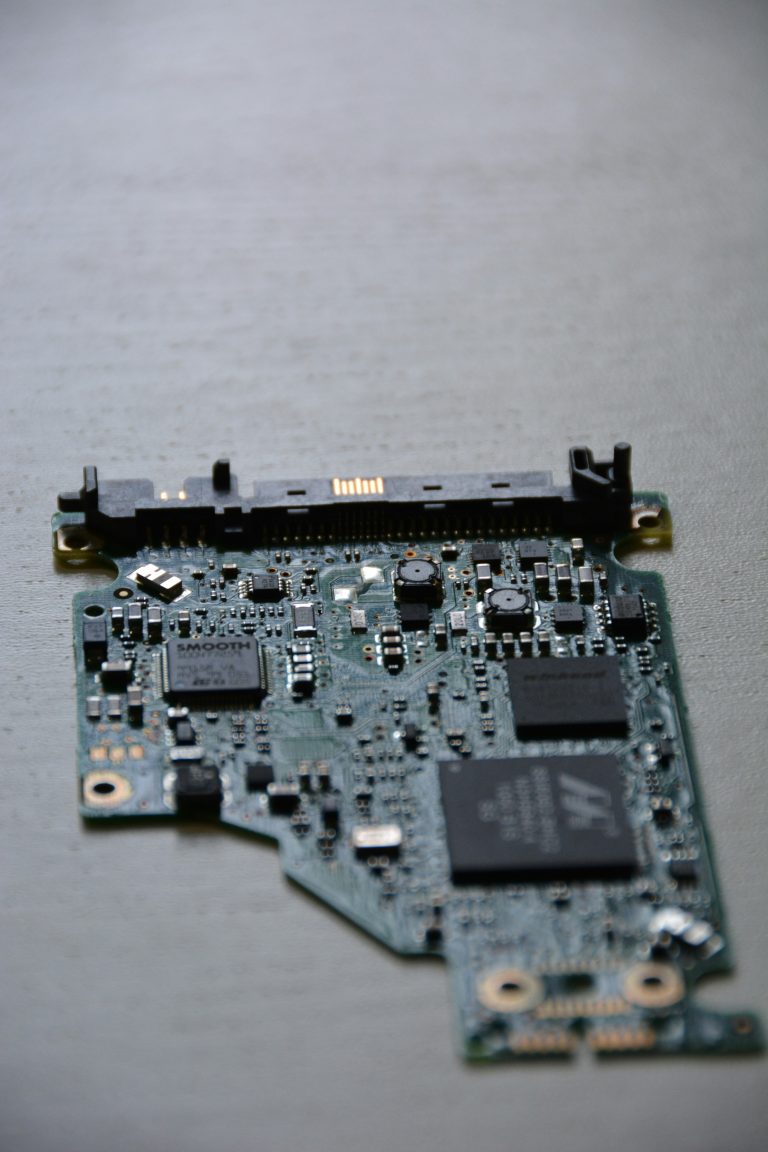
Dk/Df values high speed PCB designs depend on are the foundation of signal integrity. Accurate Dk/Df values high speed PCB engineers rely on directly determine trace impedance, insertion loss, and propagation delay. High-speed PCB designs for 5G infrastructure, automotive millimeter-wave radar, server backplanes, and high-rate SerDes systems depend entirely on two critical dielectric parameters: Dk (Dielectric Constant) and Df (Dissipation Factor / Loss Tangent). As detailed in the High-Speed PCB Parameters master page, Dk/Df values high speed PCB govern characteristic impedance and signal propagation velocity while dominating high-frequency attenuation.
This pillar content integrates official technical resources from Rogers, Isola, Shengyi, Panasonic, and Taconic, merging principle explanation, frequency characteristics, standardized Dk/Df values high speed PCB comparison table, quantified design impact, industry measurement methods, loss-level material selection, expert FAQs, and conversion guidance. Whether you are designing 25Gbps backplanes or 112G PAM4 optical modules, understanding Dk/Df values high speed PCB is essential for stackup simulation and material sourcing.
What Are Dk and Df in High-Speed PCB Design?
In modern high-frequency and high-speed digital hardware design — from ordinary low-speed circuits to 25Gbps, 56Gbps, 112Gbps high-speed interconnection, 5G millimeter-wave and RF microwave systems — Dk/Df values high speed PCB are the most fundamental material parameters that cannot be ignored. The High-Speed PCB Parameters page provides a complete framework for understanding how these parameters interact with impedance, loss budgets, and manufacturing tolerances.
Many hardware designers only focus on stackup layout and line width calculation but ignore the actual frequency-varying characteristics of Dk and Df, resulting in impedance deviation, signal reflection, timing skew, eye diagram shrinkage, and excessive bit error rate. Reliable Dk/Df values high speed PCB engineers trust come from official datasheets, not guesswork.
Simply defined:
- Dk (Dielectric Constant): The ability of PCB dielectric material to store electric field energy, directly deciding characteristic impedance and signal propagation velocity.
- Df (Dissipation Factor): Also called loss tangent (tanδ), representing how much electromagnetic energy converts into heat loss inside the substrate, controlling insertion loss and high-frequency signal attenuation.
The core logic every engineer must remember: Dk determines impedance; Df determines signal loss. Mastering Dk/Df values high speed PCB is the first step toward successful high-speed design.
Dielectric Constant (Dk / εr) Complete Introduction
Dk, also known as relative permittivity (εr), refers to the ratio of a material’s permittivity to vacuum permittivity. When evaluating Dk/Df values high speed PCB materials, Dk is the primary factor for impedance control. Higher Dk means lower impedance and slower propagation.
Core Design Influence:
Higher Dk → Lower trace characteristic impedance → Slower signal propagation speed
Lower Dk → Higher impedance → Faster signal transmission
When you need to maintain standard 50Ω single-ended or 100Ω differential impedance, any slight Dk fluctuation will force adjustments to trace width, dielectric thickness, or copper foil thickness. This is why consistent Dk/Df values high speed PCB laminates from Rogers or Megtron are preferred over standard FR4 for 25Gbps+ designs. For a deeper look at how Dk affects reflection coefficients and tolerance grades, Impedance Matching PCB provides detailed formulas.
Frequency Dependence of Dk: Nearly all PCB laminates follow the same rule: Dk gradually decreases as frequency rises from 1MHz to 40GHz. Standard FR4 has obvious Dk drift, while high-performance materials maintain stable Dk/Df values high speed PCB applications require.
Typical Dk Value Range:
Standard FR4: 4.2 – 4.8
Modified medium-loss FR4: 3.7 – 4.0
Low-loss high-speed laminate: 3.4 – 3.7
Ultra-low-loss PTFE material: 2.20 – 3.05
Dissipation Factor (Df / tanδ) Complete Introduction
Df (loss tangent) is the core indicator of dielectric loss. Among all Dk/Df values high speed PCB parameters, Df becomes increasingly critical as data rates exceed 25Gbps. Higher Df means more signal energy converts to heat, reducing transmission distance.
Core Design Influence: Higher Df = Larger insertion loss = Severe signal attenuation = Shorter reliable transmission distance. When selecting Dk/Df values high speed PCB materials for 56G PAM4 or 112G links, ultra-low Df (<0.002) is mandatory.
Frequency Dependence of Df: Different from Dk, Df increases obviously with frequency elevation. Standard FR4 Df rises sharply after 5GHz, while high-end laminates maintain a gentle Df growth curve. Always verify Dk/Df values high speed PCB at your actual operating frequency, not just 1MHz datasheet values.
Typical Df Value Range @10GHz:
Standard FR4: 0.015 – 0.022
Medium-loss modified FR4: 0.008 – 0.012
Low-loss high-speed material: 0.004 – 0.008
Ultra-low / extremely low-loss RF material: Below 0.004
Comprehensive Dk/Df Reference Table for Mainstream PCB Materials
The table below shows verified Dk/Df values high speed PCB engineers can use for stackup simulation and material selection.
| Brand / Series | Model | Dk @1MHz | Dk @10GHz | Df @1MHz | Df @10GHz |
|---|---|---|---|---|---|
| Standard FR4 | Generic | 4.5 | 4.2 | 0.020 | 0.022 |
| Shengyi | S7000 | 4.0 | 3.8 | 0.010 | 0.010 |
| Isola | FR408 | 3.9 | 3.7 | 0.010 | 0.010 |
| Shengyi | S9000 | 3.7 | 3.5 | 0.006 | 0.006 |
| Isola | I-Speed | 3.6 | 3.4 | 0.005 | 0.005 |
| Panasonic | Megtron 6 | 3.7 | 3.5 | 0.004 | 0.004 |
| Rogers | RO4350B | 3.66 | 3.48 | 0.005 | 0.0037 |
| Rogers | RO3003 | 3.05 | 3.00 | 0.0015 | 0.0010 |
| Rogers | RO5880 | 2.23 | 2.20 | 0.0012 | 0.0009 |
| Taconic | TLY-5 | 2.23 | 2.20 | 0.0010 | 0.0009 |
These Dk/Df values high speed PCB references show a clear performance gradient: FR4 for low-frequency, Megtron 6 for 25G–100G, Rogers and Taconic PTFE for mmWave.
Quantified Influence of Dk/Df on PCB Impedance & Signal Integrity
Dk Variation Rule:
Dk increases by 10% → Impedance drops by about 5% → Signal wave velocity decreases by 5%
When comparing materials with different Dk/Df values high speed PCB specifications, even small differences matter. Under the same 50Ω target, moving from Dk=3.5 to Dk=4.0 forces either 18% wider traces or 18% thinner dielectric. This is why accurate Dk/Df values high speed PCB data is essential for stackup planning.
For Df, tiny numerical differences amplify in long channels. A Df increase from 0.004 to 0.008 can reduce maximum channel length by 40%. When designing differential pairs for USB4 or PCIe, understanding Dk/Df values high speed PCB is essential, and Differential Pair Routing Rules offers practical guidance based on your material’s properties.
Common Dk/Df Measurement Methods & Accuracy Comparison
Verifying Dk/Df values high speed PCB requires proper test methods. The resonant ring method offers highest precision. TDR inversion provides fast field verification. Always request supplier datasheets with Dk/Df values high speed PCB measured at your application frequency, not just 1MHz.
High-Speed PCB Material Selection Guide by Df Loss Grade
Selecting the right Dk/Df values high speed PCB laminates starts with Df loss grading:
Conventional Loss (Df > 0.015): Standard FR4. Not recommended above 1GHz.
Medium Loss (Df: 0.008–0.012): Shengyi S7000, Isola FR408. Suitable for 3–5G links.
Low Loss (Df: 0.004–0.008): Shengyi S9000, Isola I-Speed. Ideal for 10G–25G designs.
Ultra-Low Loss (Df: 0.002–0.004): Panasonic Megtron 6, Rogers RO4350B. For 25G–100G backplanes.
Extremely Low Loss (Df < 0.002): Rogers RO3003, RO5880, Taconic TLY-5. Required for mmWave and 100G+.
Matching Dk/Df values high speed PCB to your data rate and channel length is critical. Selecting the right loss grade also improves Return Path PCB performance.
Core Key Takeaways
- Dk/Df values high speed PCB determine impedance, loss, and overall signal integrity.
- Dk controls impedance and propagation speed; Df controls insertion loss.
- Both parameters are frequency-dependent: verify Dk/Df values high speed PCB at your actual operating frequency.
- Official datasheet data from Rogers, Isola, Shengyi, Panasonic, and Taconic is the most credible source for Dk/Df values high speed PCB.
- Use Df loss grading to quickly select materials based on your target data rate.
The High-Speed PCB Parameters master page provides additional guidance on impedance tolerance, insertion loss budgeting, and testing protocols, all of which depend on accurate Dk/Df values high speed PCB data.
Frequently Asked Questions About Dk/Df for High-Speed PCB Materials
Q1: Where can I find reliable Dk/Df values high speed PCB data?
Official datasheets from Rogers, Isola, Panasonic, Shengyi, and Taconic are the most trusted sources.
Q2: How do Dk/Df values high speed PCB change with frequency?
Dk decreases slightly as frequency increases; Df increases significantly. Always use values measured at your operating frequency.
Q3: Can standard FR4 provide reliable Dk/Df values high speed PCB for 25Gbps?
No. FR4 has high Df (>0.02) and unstable Dk, causing excessive loss and impedance variation.
Q4: What Dk/Df values high speed PCB are needed for 112G PAM4?
Extremely low loss materials with Df < 0.002 and Dk stability within ±2% are required.
Q5: How do I verify Dk/Df values high speed PCB from my supplier?
Request TDR and VNA test reports, and cross-reference with official manufacturer datasheets.
Get Accurate Dk/Df Values High Speed PCB Data & Custom Quotation
Need verified Dk/Df values high speed PCB for your specific laminate models? Our engineering team provides free stackup simulation, material comparison, and impedance calculation. We support FR4, Shengyi, Isola, Panasonic Megtron, Rogers, and Taconic.
Send your project parameters: working frequency, signal rate, target impedance, channel length, and application scenario. We will provide sorted official Dk/Df values high speed PCB datasheets, professional selection suggestions, and competitive manufacturing quotations.
© 2026 HighSpeedPCBs