Article Summary
PCB cost factors are far more complex for high-speed boards than standard circuit boards due to tighter manufacturing tolerances, premium low-loss substrates, advanced via structures, stricter impedance control, and comprehensive performance testing. Multiple core pcb cost factors jointly decide the final quotation, among which layer count and material grade are the top two cost drivers, followed by line/space precision, HDI & backdrilling technology, surface finish selection, production volume, and special custom processes. This complete guide to pcb cost factors breaks down every influencing factor with clear comparison tables, relative cost multiples, professional principle explanations, and practical design optimization tips.
1. What Makes High-Speed PCBs Cost More Than Standard Boards
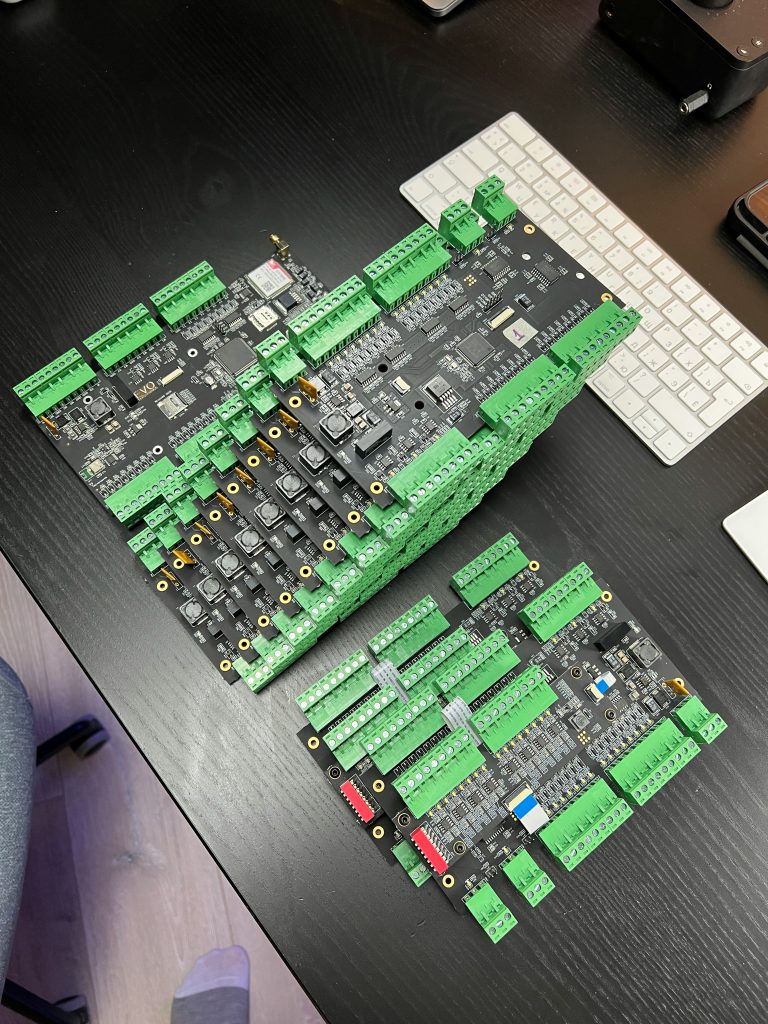
High-speed printed circuit boards differ fundamentally from ordinary low-frequency PCBs in design requirements, manufacturing difficulty, material specification, and testing standards — all of which push up production costs significantly. As detailed in the high-speed PCB cost master page, understanding pcb cost factors is essential for budget planning.
Standard PCBs only handle basic power supply and low-speed signal transmission, with loose tolerance requirements, common FR4 materials, and simple through-hole processes. In contrast, high-speed boards are designed for high-frequency signal integrity, crosstalk suppression, impedance stability, and low signal attenuation. They require ultra-tight manufacturing tolerances, dedicated power/ground plane stacking, low-loss dielectric materials, and additional electrical performance testing.
Three core reasons explain the price gap:
- Higher precision requirements for layer alignment, line width, dielectric thickness, and impedance control
- Mandatory adoption of mid-loss / low-loss / ultra-low-loss substrates instead of generic FR4
- Extra production steps, advanced via processes, and stricter quality & reliability testing
Many global procurement teams face unexpected budget overruns simply because they ignore these inherent pcb cost factors at the early design stage. This guide systematically analyzes every cost variable, delivers clear data reference, and shares actionable optimization methods.
2. Key Cost Drivers for High-Speed PCBs (Full Overview)
High-speed PCB pricing is not decided by a single item but by the combined effect of multiple pcb cost factors. According to industry manufacturing data, 80% of total costs come from 20% of core factors: layer count, material grade, and production quantity.
| Cost Factor | Impact Level | Cost Influence |
|---|---|---|
| Layer Count | ★★★★★ | Very High |
| Material Grade | ★★★★★ | Very High |
| Production Quantity | ★★★★★ | Inversely Proportional |
| Line / Space Precision | ★★★★☆ | Medium to High |
| Via & HDI Technology | ★★★★☆ | Medium to High |
| Special Custom Processes | ★★★★☆ | Very High |
| Surface Finish | ★★★☆☆ | Medium |
Layer count and substrate material dominate the overall cost structure. For PCB Manufacturing, fine line/space, backdrilling, HDI structure and special customized processes further raise manufacturing difficulty and lower production yield, bringing obvious cost premiums.
For cost control, you should prioritize optimizing layer stackup and material selection first, then reasonably define line/space limits and via structures, and finally plan batch quantity to enjoy volume discounts.
3. Layer Count – The Biggest PCB Cost Driver
Among all pcb cost factors, layer count is the No.1 cost driver. Each additional layer means more copper foil, more prepreg, repeated lamination cycles, longer pressing curing time, higher alignment difficulty, and increased labor and overhead costs.
High-speed designs need independent ground planes, power planes, and isolated signal layers to maintain signal integrity, so layer quantity is inevitably higher than standard boards. Taking 4-layer high-speed PCB as 1.0x baseline, the relative cost growth rule is as follows:
| Layer Count | Relative Cost (4L = 1.0x) | Main Reason for Cost Increase |
|---|---|---|
| 4 Layers | 1.0x | Standard lamination, basic material consumption |
| 6 Layers | 1.5 – 1.8x | Extra lamination cycle, more prepreg and copper |
| 8 Layers | 2.0 – 2.5x | More internal planes, longer production cycle |
| 10 Layers | 2.5 – 3.5x | Complex stacking, stricter layer alignment tolerance |
| 12 Layers | 3.5 – 5.0x | High multi-layer structure, precision lamination control |
| 16 Layers & Above | 6.0 – 10.0x | Exponential cost rise, ultra-high precision & low yield |
As layers increase, layer offset, dielectric thickness deviation, and lamination defect risks rise sharply. Unnecessary redundant layers are one of the biggest causes of budget waste. Optimizing stackup structure reasonably is a key pcb cost factor control method.
4. Material Grade – Performance Level vs Actual Price
Substrate material grade is another top-tier pcb cost factor that cannot be compromised for high-frequency and high-speed applications. Ordinary FR4 cannot meet high-speed demands due to unstable Dk/Df value, high dielectric loss, and serious signal attenuation at high frequencies. For detailed material data, see High-Speed PCB Material.
Materials are divided into four grades by loss performance, with standard FR4 as 1.0x cost baseline:
| Material Grade | Relative Cost (FR4 = 1.0x) | Typical Material Models | Application Scenarios |
|---|---|---|---|
| Standard FR4 | 1.0x | Generic regular FR4 | Low-speed consumer electronics |
| Mid-Loss Material | 1.5 – 2.0x | S7000, FR408 | Medium-speed industrial control |
| Low-Loss Material | 2.5 – 3.5x | Megtron 6, RO4350B | Server, communication high-speed board |
| Ultra-Low-Loss Material | 4.0 – 6.0x | Megtron 8, RO5880 | 5G/6G RF, millimeter-wave, high-end computing |
The key principle is matching material grade with working frequency. Blindly choosing the highest-end material wastes budget; downgrading material casually leads to signal integrity failure. Understanding pcb cost factors helps you make the right material selection.
5. Line/Space Precision & Advanced Via Technology
Fine line/space design and advanced via structure directly determine manufacturing difficulty and yield, acting as critical pcb cost factors for high-speed PCBs. For Impedance Matching, fine line width is sometimes necessary but should not be over-specified.
The industry standard baseline is 4/4mil line/space. Finer dimensions require high-precision exposure, etching and alignment equipment, reducing production yield and adding cost.
| Process Spec | Cost Increase | Professional Remark |
|---|---|---|
| 3/3mil Line/Space | +15% – 25% | Slight precision upgrade, basic precision etching required |
| 2/2mil Line/Space | +50% – 80% | High-precision equipment needed, obvious yield decline |
| Backdrilling | +10% – 20% | Remove via stubs to eliminate resonance for high-speed signals |
| HDI (1+N+1) | +25% – 40% | Laser drilling + sequential lamination, complex workflow |
For high-speed impedance control, designers should avoid over-specifying ultra-fine 2/2mil or finer rules unless strictly required. Unnecessary HDI and backdrilling will only bring extra cost burden as pcb cost factors.
6. Surface Finish Types: Cost & High-Speed Suitability
Surface finish affects solderability, oxidation resistance, flatness and impedance stability, and is an indispensable pcb cost factor for high-speed board selection. Flat surface morphology is critical to maintain consistent impedance and signal integrity. For small batch PCB production and high speed PCB mass production, surface finish choice affects both cost and performance.
| Surface Finish | Relative Cost | High-Speed Suitability | Feature |
|---|---|---|---|
| HASL | 1.0x | ❌ Not Recommended | Uneven surface, destroys impedance consistency |
| OSP | 1.05 – 1.1x | 🟡 Basic Use | Low cost, good flatness, poor long-term storage |
| Immersion Silver | 1.15 – 1.25x | ✅ Highly Suitable | Ultra-flat, stable impedance performance |
| ENIG | 1.2 – 1.4x | ✅ Widely Used | Balanced reliability, solderability and flatness |
| ENEPIG | 1.5 – 1.7x | ✅ Premium Choice | Ultra-high reliability for high-end high-speed devices |
HASL is the cheapest but completely unsuitable for high-speed precise signal transmission. OSP is cost-effective but not ideal for long-term batch storage. Immersion silver, ENIG and ENEPIG are the preferred options for high-speed projects.
7. Production Quantity & Batch Volume Discount Rules
Production quantity is one of the most flexible pcb cost factors, showing an obvious inverse proportional price trend. Every PCB order has fixed one-time costs: Gerber engineering review, production mold opening, line debugging, and initial quality inspection. These fixed expenses are shared by all boards in the batch.
| Order Quantity | Unit Price Level | Fixed Cost Amortization |
|---|---|---|
| 1 – 10 Pieces | Very High | High amortization per prototype board |
| 10 – 100 Pieces | Medium to High | Moderate cost sharing |
| 100 – 500 Pieces | Medium | Low amortization burden |
| 500+ Pieces | Very Low | Extremely low per-unit fixed cost |
Small-batch prototyping bears the full engineering setup cost, so unit price is much higher. Medium and mass production enjoy obvious volume discounts. For project planning, combining prototype trial and mass production properly can effectively reduce the overall average cost.
8. Practical Tips to Optimize High-Speed PCB Cost
Based on all pcb cost factors above, here are professional and actionable design optimization tips:
- Optimize stackup design to reduce redundant layers, avoid blind over-layering
- Select substrate material strictly according to working frequency, do not over-specify ultra-low-loss material
- Relax line/space tolerance appropriately where impedance is not sensitive, do not pursue ultra-fine design blindly
- Adopt backdrilling and HDI only when necessary; use standard through-holes for ordinary signal lines
- Choose ENIG or immersion silver as the mainstream surface finish, balance cost and high-speed performance
- Reasonably plan batch quantity, merge repeated small orders to enjoy volume discounts
- Follow DFM design rules to improve production yield and reduce rework cost
9. Key Takeaways
- The top two decisive pcb cost factors are layer count and material grade, contributing the largest proportion of high-speed PCB price
- Line/space precision, via technology, surface finish and special processes bring medium to high cost premiums
- Production quantity follows inverse proportional pricing; larger batches get obvious volume discounts
- High-speed PCB cost is always a balance of signal performance, manufacturing quality, delivery time and budget
- The most effective cost reduction method is design-stage optimization, not compromising material or process quality blindly
For a complete understanding of all cost-related topics, return to the high-speed PCB cost master page.
10. FAQ About High-Speed PCB Cost Factors
Q1: Why are high-speed PCBs much more expensive than standard PCBs?
Tighter manufacturing tolerances, low-loss high-grade materials, advanced via/HDI processes, stricter impedance control and extra performance testing together increase production cost. These are the fundamental pcb cost factors.
Q2: Which factor affects PCB price the most?
Layer count ranks first, followed by substrate material grade; these two items control over 60% of the total cost.
Q3: Is HDI structure necessary for all high-speed boards?
No. Only compact layout and high-density interconnection scenarios need HDI; ordinary high-speed designs can use standard multilayer structures to save cost.
Q4: What is the most cost-effective surface finish for high-speed PCB?
ENIG is the best balance of cost, flatness, solderability and signal stability; immersion silver is also a good alternative.
Q5: How can I reduce high-speed PCB cost without losing performance?
Optimize layer stackup, match material with frequency, avoid over-precise line/space, reduce unnecessary special processes, and consolidate order quantity for batch discounts.
11. Get Custom High-Speed PCB Cost Estimate & Quote
If you are designing high-speed communication, server, industrial control or RF equipment PCB, and need an accurate, transparent cost breakdown based on your exact layer count, material grade, line/space requirement, via structure, surface finish and order quantity, our professional engineering team can help you understand all pcb cost factors and provide a customized quote.
We provide one-stop high-speed PCB design review, DFM optimization and free customized quotation service for global engineers and procurement buyers. Whether you need small-batch prototyping or large-scale mass production, we can balance your performance budget and delivery lead time perfectly.
Submit your Gerber files and design specifications now to get a no-obligation high-speed PCB cost estimate and professional technical consultation.